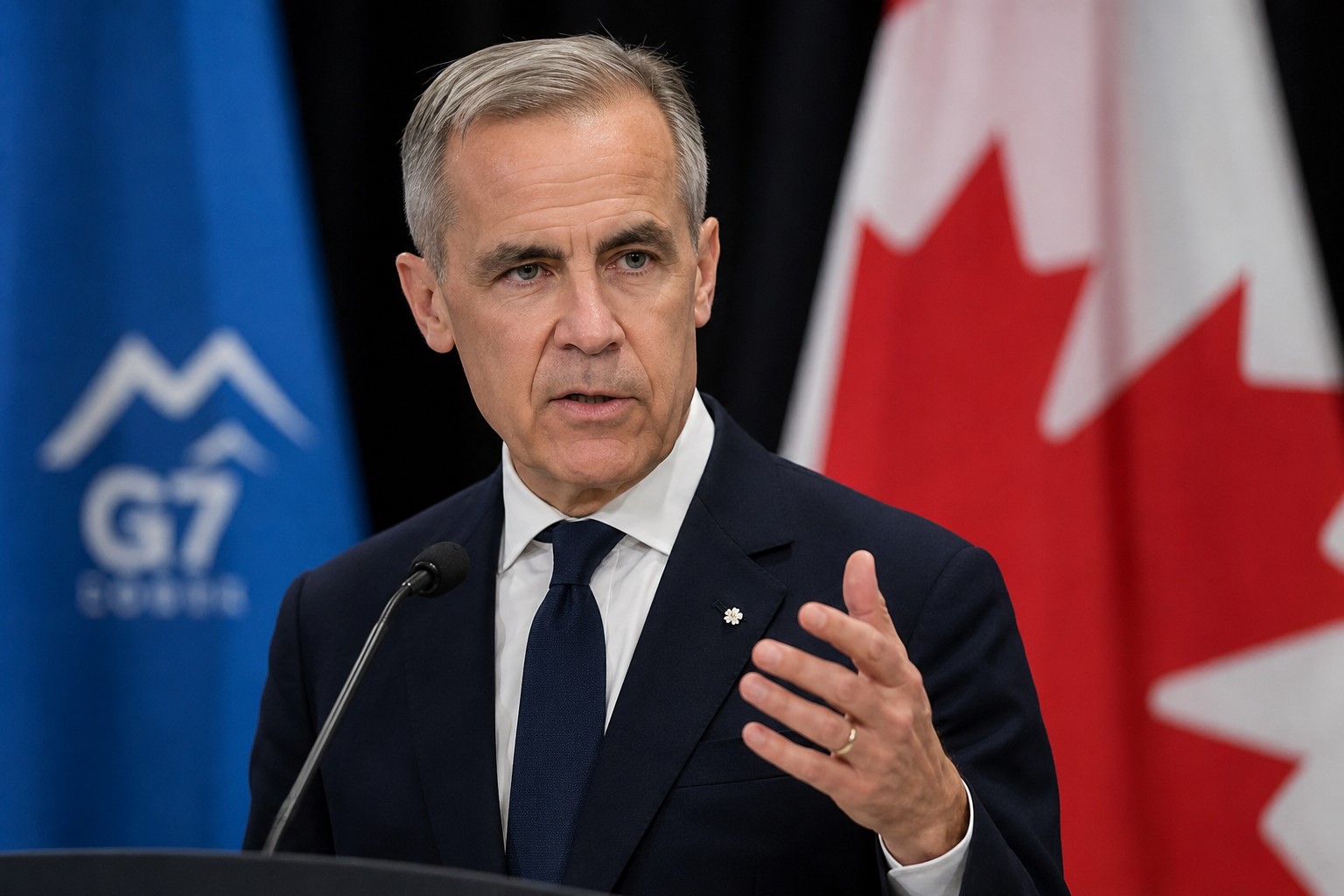
Canadian Prime Minister Mark Carney says the recent conflict between the United States and Iran was ultimately “worth it” following the announcement of a tentative agreement aimed at ending the war and preventing Iran from obtaining a nuclear weapon.
Speaking with CNN’s Kaitlan Collins during the G7 summit in Évian-les-Bains, France, Carney defended the outcome of the conflict when asked whether the war had been justified from Canada’s perspective.
“I’ve always believed Iran is the biggest exporter of terror,” Carney said. He argued that Iran’s pursuit of a nuclear weapon posed a major threat to regional and global security, adding that removing that possibility from the equation made the conflict worthwhile.
The United States and Iran announced a preliminary agreement on Sunday that includes a 60-day extension of the ceasefire while negotiators work toward a comprehensive peace deal. Although the full details have not been released publicly, U.S. Vice-President J.D. Vance described the document as relatively brief.
Carney revealed that he has reviewed the proposed agreement and described it as a “game changer” that exceeded his expectations.
According to the prime minister, the framework lays the foundation for preventing Iran from developing nuclear weapons, improving economic cooperation across the region, and advancing diplomatic solutions to other regional conflicts, including the situation in Lebanon.
While declining to discuss specific provisions, Carney said the agreement is well-structured and has support from countries across the region. However, some aspects remain contentious. Iran’s foreign minister indicated that the deal would require Israel to withdraw from Lebanon, a condition Israel has already rejected.
Carney’s remarks reflect an evolving position on the conflict. Following the initial U.S. and Israeli strikes against Iran on February 28, he publicly supported efforts to stop Iran’s nuclear ambitions. He later criticized Washington for failing to adequately consult allies before launching military action, while continuing to back the overall objective.
Canada’s Potential Role in the Strait of Hormuz
The tentative agreement reportedly includes plans to reopen the Strait of Hormuz, a vital shipping route that carries roughly 20 percent of the world’s oil and gas supplies. The waterway has faced significant disruptions since the conflict began, contributing to volatility in global energy markets.
Asked whether Canada would assist with efforts to restore maritime security in the region, Carney said Ottawa is prepared to contribute where possible.
While acknowledging that Canada is not a major naval power in the Middle East, he noted that the country could provide monitoring capabilities and financial support to help stabilize shipping operations and support the implementation of the agreement.
As negotiations continue, world leaders will be closely watching whether the ceasefire holds and whether the tentative framework can evolve into a lasting peace accord.
Comments (0)
Sign in to join the conversation.