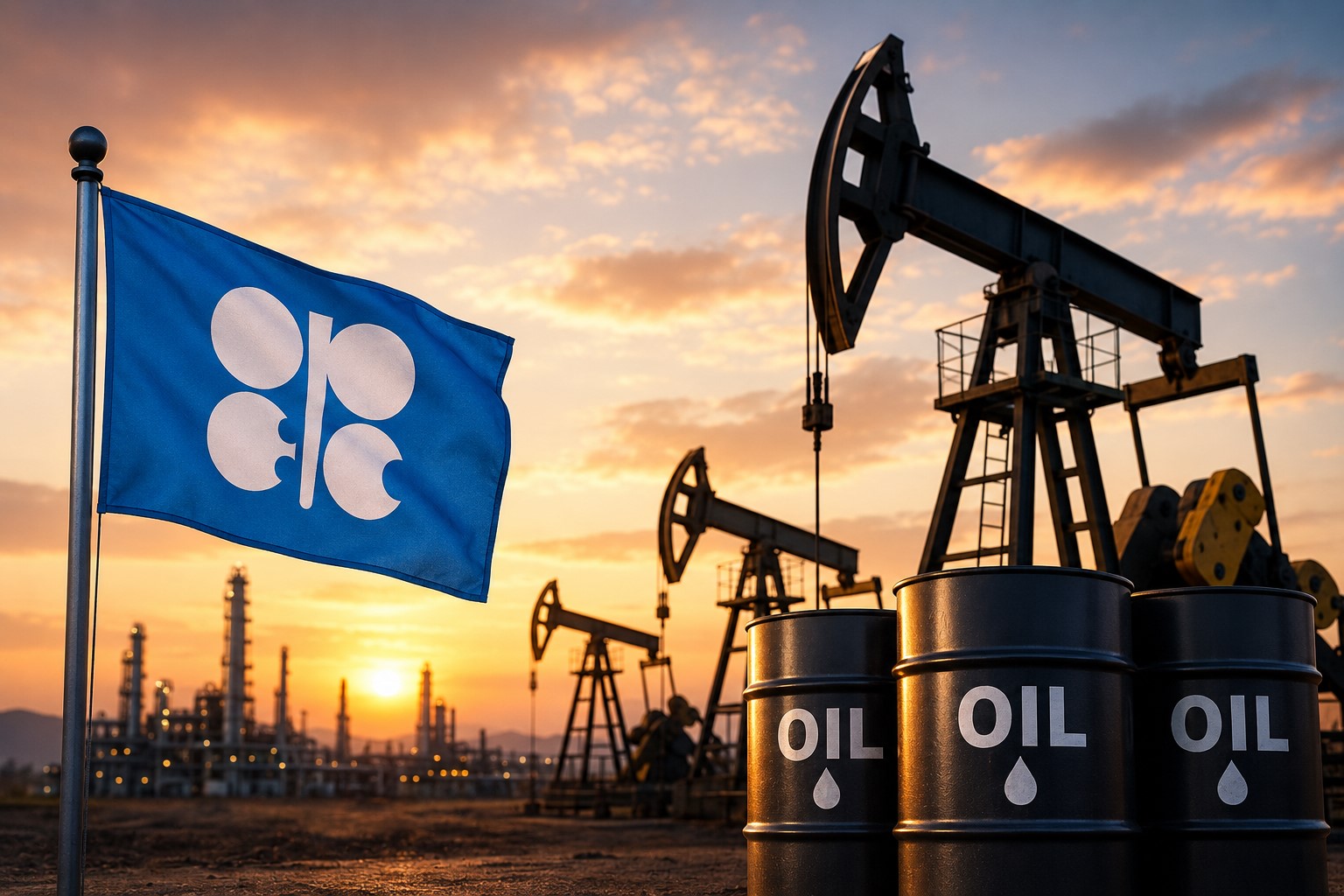
Seven members of the OPEC+ alliance have agreed to modestly increase oil production in August as global crude prices continue to decline and energy markets show signs of stabilizing following recent geopolitical tensions in the Middle East.
The Organization of the Petroleum Exporting Countries (OPEC) and its allies announced that Saudi Arabia, Russia, Iraq, Kuwait, Kazakhstan, Algeria, and Oman will collectively raise output by 188,000 barrels per day beginning in August. The decision marks the fifth consecutive monthly production increase by the group as it seeks to balance supply with evolving market conditions.
In a joint statement, the participating countries said they would continue monitoring the global oil market closely while maintaining a cautious approach to ensure long-term market stability. The alliance emphasized that future production decisions will remain dependent on economic conditions, demand trends, and global supply levels.
Oil prices have fallen significantly in recent weeks following an easing of tensions between the United States and Iran. Improved diplomatic negotiations and an interim agreement between the two countries have helped restore confidence in energy markets, reducing concerns over major supply disruptions.
A key factor behind the price decline has been the reopening of shipping routes through the Strait of Hormuz, one of the world's most important oil transit corridors. Under the interim agreement, Iran committed to allowing commercial vessels to pass through the strategic waterway, while the United States eased restrictions affecting Iranian ports. Although shipping activity has increased, traffic remains below pre-conflict levels, and regional security concerns continue to persist.
Brent crude, the international oil benchmark, has dropped to around $72 per barrel, close to prices seen before the outbreak of hostilities earlier this year. During the height of the conflict, crude prices surged toward $120 per barrel as fears of supply disruptions spread across global energy markets.
The conflict had forced several Middle Eastern producers to reduce output as exports through the Strait of Hormuz became severely restricted. Industry analysts believe full production across the Gulf region may not recover completely until 2027, reflecting the long-term impact of the crisis on global energy infrastructure.
Despite the recent decline in oil prices, economists caution that fuel costs and broader consumer prices could remain elevated for some time. Higher transportation and energy expenses continue to affect inflation worldwide, even as oil markets gradually return to more stable conditions.
The latest OPEC+ decision signals the group's intention to carefully increase supply without flooding the market, balancing efforts to support economic recovery while preventing another sharp decline in oil prices. Investors and energy analysts will continue watching geopolitical developments and future OPEC+ meetings for further signals on global oil production strategy.
Comments (0)
Sign in to join the conversation.