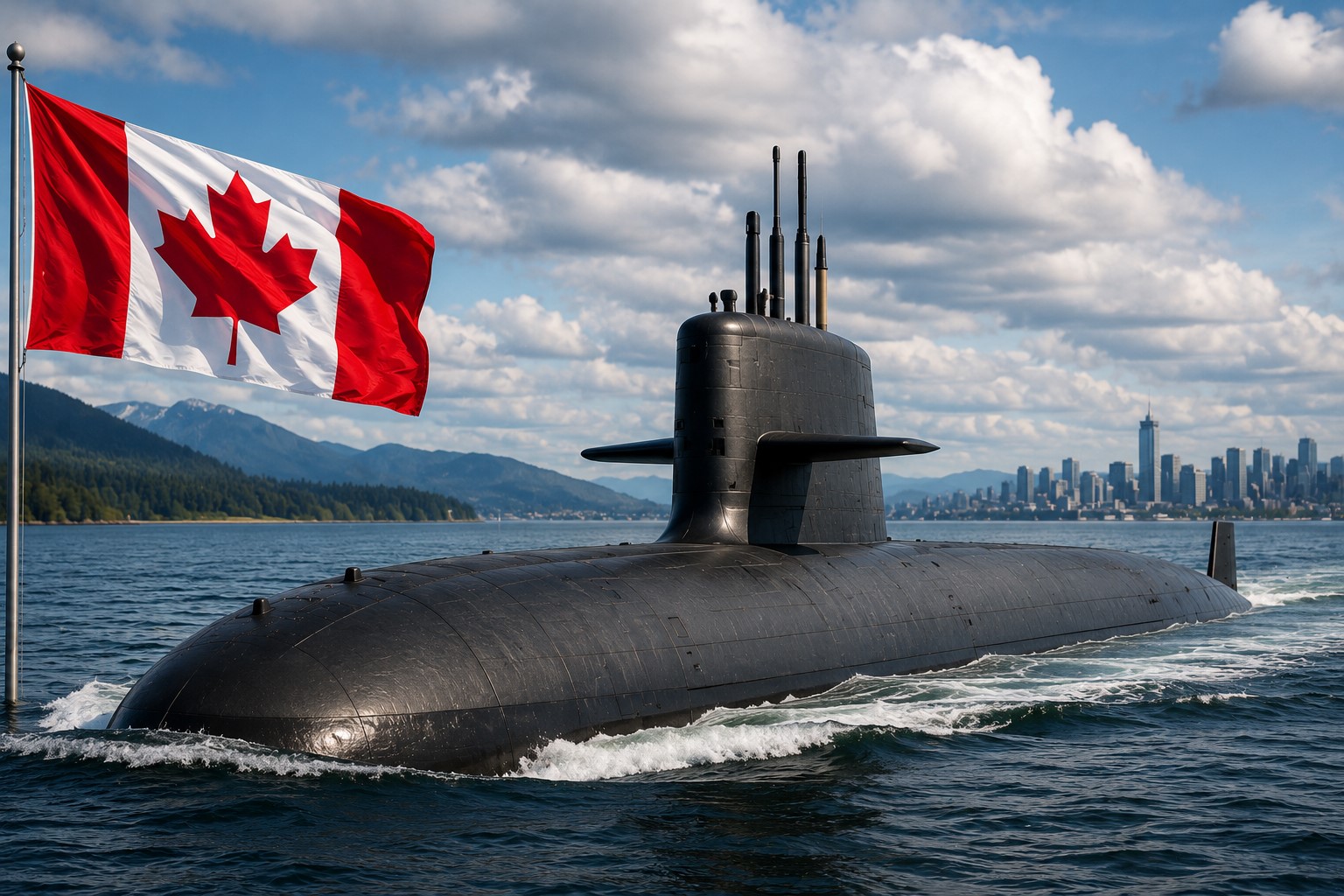
Canada is expected to announce the preferred bidder for its landmark 12-submarine procurement program, marking one of the largest defence acquisitions in the country's history. Prime Minister Mark Carney is scheduled to unveil the decision in Halifax before attending the NATO leaders' summit, ending months of intense competition between Germany's TKMS and South Korea's Hanwha.
The project is expected to cost between $20 billion and $30 billion for the submarines themselves, with lifetime operations, maintenance, and upgrades potentially raising the total value to $50 billion. The announcement will identify the government's preferred supplier, although final contract negotiations are expected to continue for several years before a formal agreement is signed.
The new fleet is intended to modernize the Royal Canadian Navy and significantly strengthen Canada's ability to patrol and defend its Arctic, Atlantic, and Pacific waters. Canada currently operates four aging second-hand submarines, with typically only one available for deployment at any given time. Military planners have stated that a fleet of 12 submarines is required to maintain three operational vessels while others undergo maintenance and training.
Both competing proposals meet Canada's operational requirements. Germany's TKMS has offered its 212CD diesel-electric submarine, while South Korea's Hanwha has proposed the KSS-III Batch-II submarine. Since both platforms satisfy military needs, the government has placed considerable emphasis on industrial and economic benefits when evaluating the bids.
Hanwha has pledged more than $70 billion in trade and investment for Canada, along with the creation of over 25,000 jobs annually through 2044. The company has also proposed investments in Canada's steel industry and domestic manufacturing sector. Meanwhile, Germany has promoted its long-standing defence partnership with Canada through NATO, estimating its proposal could contribute $86 billion to Canada's economy while generating hundreds of thousands of job-years over the life of the program.
The submarine competition has become one of the most closely watched defence procurements in recent Canadian history, with both governments actively promoting their proposals through diplomatic engagement and industry partnerships. South Korea has mounted an especially aggressive campaign as it seeks to expand its global defence exports, while Germany has highlighted its extensive experience supplying submarines to navies around the world.
The procurement forms part of Canada's broader plan to significantly increase defence spending and modernize its armed forces to meet NATO commitments. Beyond strengthening national security, the project is expected to deliver substantial economic benefits through domestic manufacturing, technology transfer, infrastructure investment, and long-term industrial partnerships.
The government's decision will shape Canada's naval capabilities for decades and represents a major milestone in the country's efforts to modernize its military while strengthening its defence industry and Arctic security.
Comments (0)
Sign in to join the conversation.