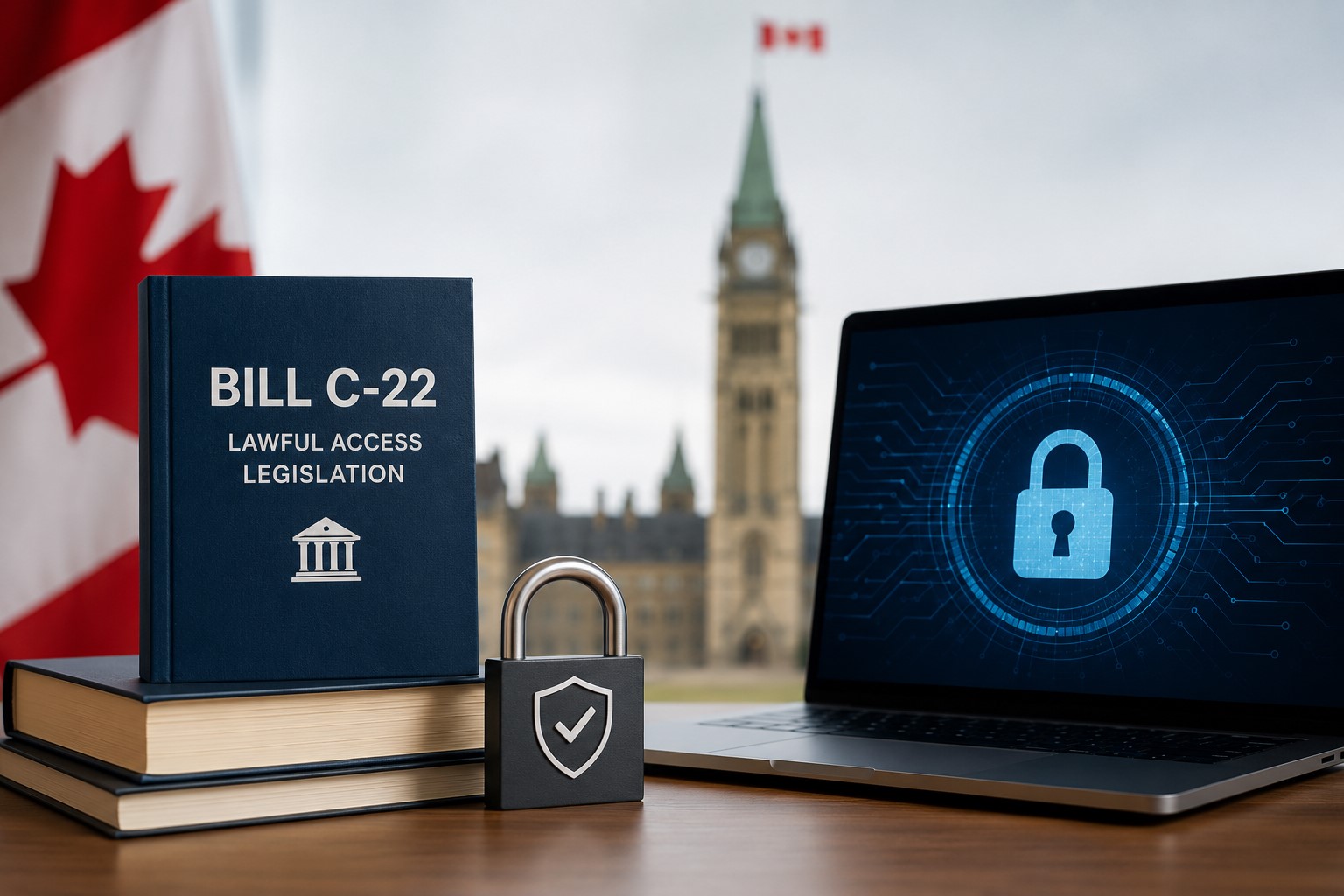
The federal government has introduced a series of amendments to its controversial lawful access legislation, Bill C-22, after facing significant criticism from technology companies, business groups, and civil liberties advocates. The changes were approved during a late-night meeting of the House of Commons public safety committee, where MPs reviewed nearly 100 proposed amendments and adopted several revisions put forward by Public Safety Minister Gary Anandasangaree and Liberal members.
The amendments come as the government accelerates the bill’s passage through Parliament before the summer recess. Following approval in the House of Commons, the legislation is expected to move to the Senate for further examination when Parliament reconvenes in September.
Among the most significant changes is an explicit protection for encryption technologies, a key concern raised by industry leaders and privacy advocates. The government also reduced the mandatory metadata retention period for technology companies from up to one year to six months and narrowed the circumstances under which authorities can require companies to preserve metadata for investigations.
While the bill excludes the retention of emails, web browsing histories, social media activity, and text message content, it would still allow the collection of certain communications data, including phone contact records and location-related information. Cybersecurity experts have warned that large-scale metadata storage could create attractive targets for hackers and foreign adversaries.
Another amendment broadens the definition of a “systemic vulnerability,” strengthening protections against government requirements that could weaken digital security. The revised language now refers to any vulnerability that creates a credible risk of unauthorized access to secure information.
Despite the changes, the legislation continues to require telecommunications providers, internet companies, and other electronic service providers to build surveillance and monitoring capabilities that can be accessed by law enforcement agencies and the Canadian Security Intelligence Service (CSIS). Critics argue that this obligation remains one of the bill’s most controversial provisions.
Industry reactions have been mixed. Meta welcomed the government's efforts to address concerns but stated that further revisions are needed regarding encryption protections and third-party surveillance tools. Google, meanwhile, said the amendments fail to resolve many of the bill’s fundamental issues, particularly the use of secret ministerial orders.
The government also expanded oversight provisions by granting Canada's intelligence watchdog greater access to information related to ministerial orders. However, privacy advocates maintain that the legislation still grants broad powers to compel companies to facilitate surveillance operations behind closed doors.



Comments (0)
Sign in to join the conversation.