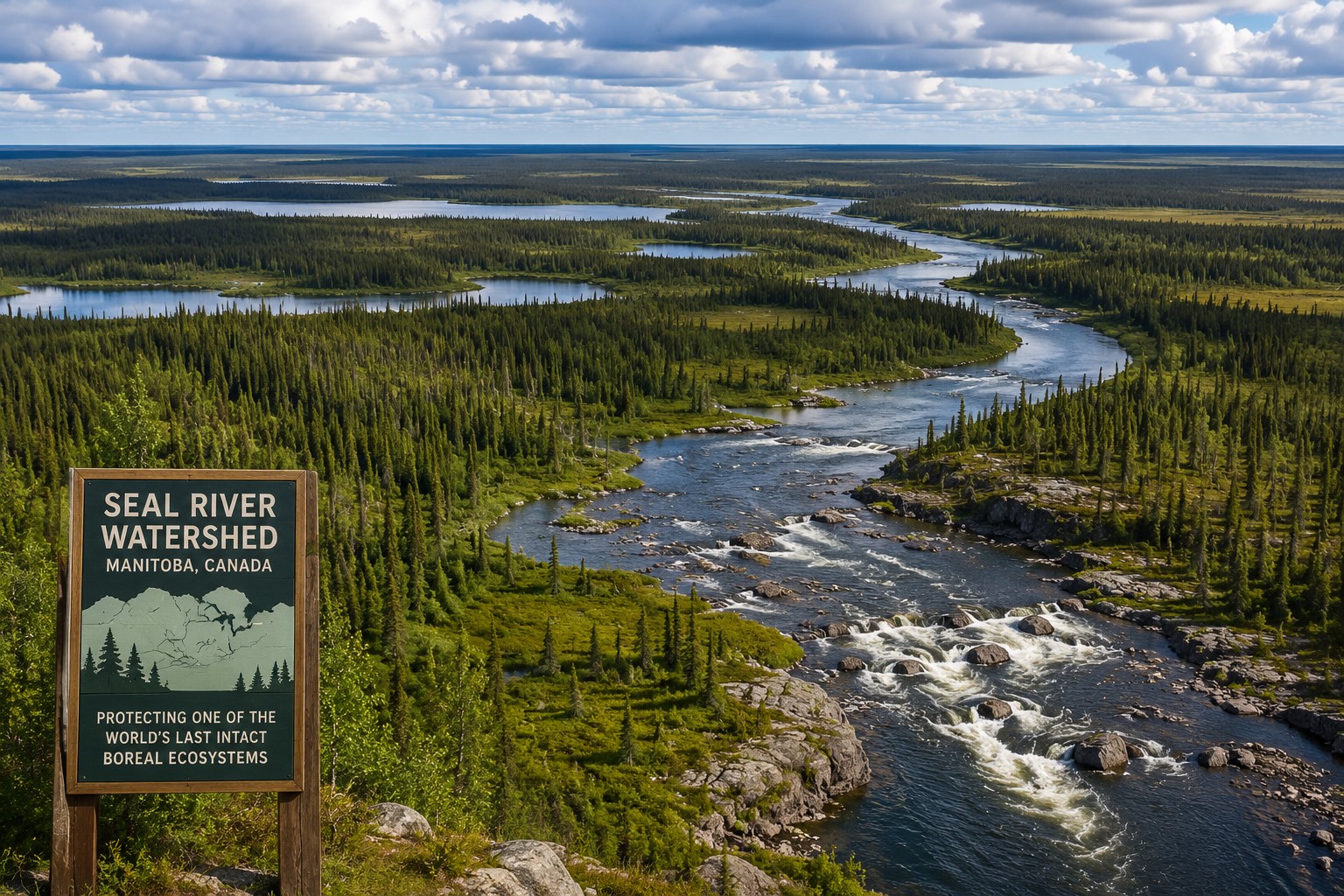
A major conservation initiative aimed at safeguarding one of the world's last largely untouched boreal ecosystems is moving forward in northern Manitoba, but scientists caution that protecting the region may present unexpected environmental challenges.
Plans are being developed to establish both provincial and national parks across the Seal River Watershed, a remote area covering approximately 50,000 square kilometres north of Winnipeg and west of Hudson Bay. The proposal seeks to permanently shield the landscape from industrial development, mining, and other forms of resource extraction.
The project is being developed through a partnership involving the federal and Manitoba governments alongside four First Nations, with the goal of preserving the area's ecological integrity while ensuring local Indigenous communities can continue to use the land sustainably for traditional activities.
The Seal River Watershed is considered one of the most intact boreal ecosystems remaining on Earth. Experts estimate that 99.97% of the region remains in a near-pristine condition, making it one of Canada's most valuable natural landscapes for wildlife, freshwater systems, and carbon storage.
However, some environmental researchers warn that park designation alone may not guarantee long-term protection. Increased tourism, infrastructure development, and greater human access associated with protected areas could place additional pressure on the fragile ecosystem.
Climate change is also emerging as a growing concern. Rising temperatures, shifting weather patterns, and changing wildlife habitats could accelerate environmental changes across the watershed, potentially affecting its biodiversity and long-term resilience.
Supporters of the proposal argue that formal protection remains the best opportunity to preserve the region before future industrial development expands into northern Manitoba. They believe careful planning, Indigenous leadership, and sustainable management practices will be essential to balancing conservation with responsible public access.
As discussions continue, the Seal River Watershed has become a focal point in Canada's broader efforts to protect biodiversity while adapting conservation strategies to the realities of a changing climate.



Comments (0)
Sign in to join the conversation.