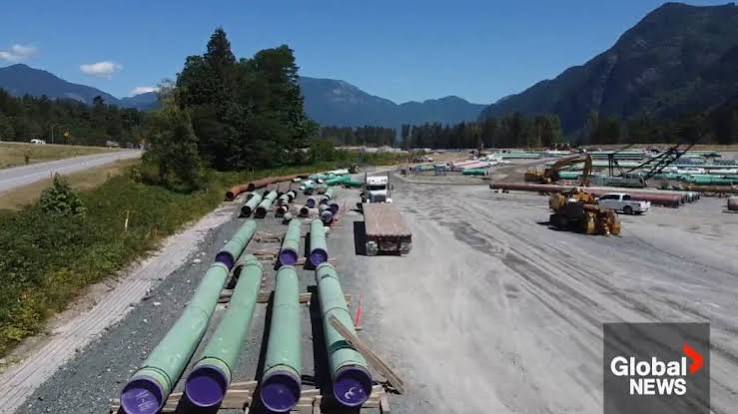
Internal government polling reportedly played a significant role in shaping Prime Minister Mark Carney’s approach to advancing a proposed oil pipeline connecting Alberta to Canada’s Pacific Coast, according to documents obtained through an access-to-information request.
The surveys, conducted by the Privy Council Office during negotiations with Alberta and British Columbia, suggested that a clear majority of Canadians supported expanding oil pipeline infrastructure. The findings reportedly showed backing not only in traditional energy-producing provinces but also in regions where pipeline projects have historically faced stronger opposition.
Initial polling found that roughly two-thirds of respondents supported the construction or expansion of oil pipelines. Even after participants were presented with potential environmental concerns—including habitat disruption and the risk of oil spills—a majority continued to support new pipeline development.
The polling also indicated majority support in British Columbia and Quebec, provinces that have often been central to debates over major energy infrastructure projects. The results suggested the proposal had broad national appeal despite ongoing political and environmental divisions.
Following the announcement of a federal-provincial energy cooperation agreement with Alberta, additional polling asked Canadians whether the deal was beneficial for the country. More respondents viewed the agreement positively than negatively, reinforcing the government's confidence in pursuing the project.
The reported findings have sparked discussion about the use of internal government polling in shaping major policy decisions. Critics have questioned whether some survey questions may have influenced responses, while supporters argue the results reflect growing public interest in strengthening Canada's energy sector and expanding export capacity.
The proposed pipeline remains subject to regulatory approvals, environmental assessments, and further negotiations. As planning moves forward, the project is expected to remain at the center of national discussions surrounding economic growth, energy security, environmental protection, and Canada's long-term infrastructure strategy.



Comments (0)
Sign in to join the conversation.