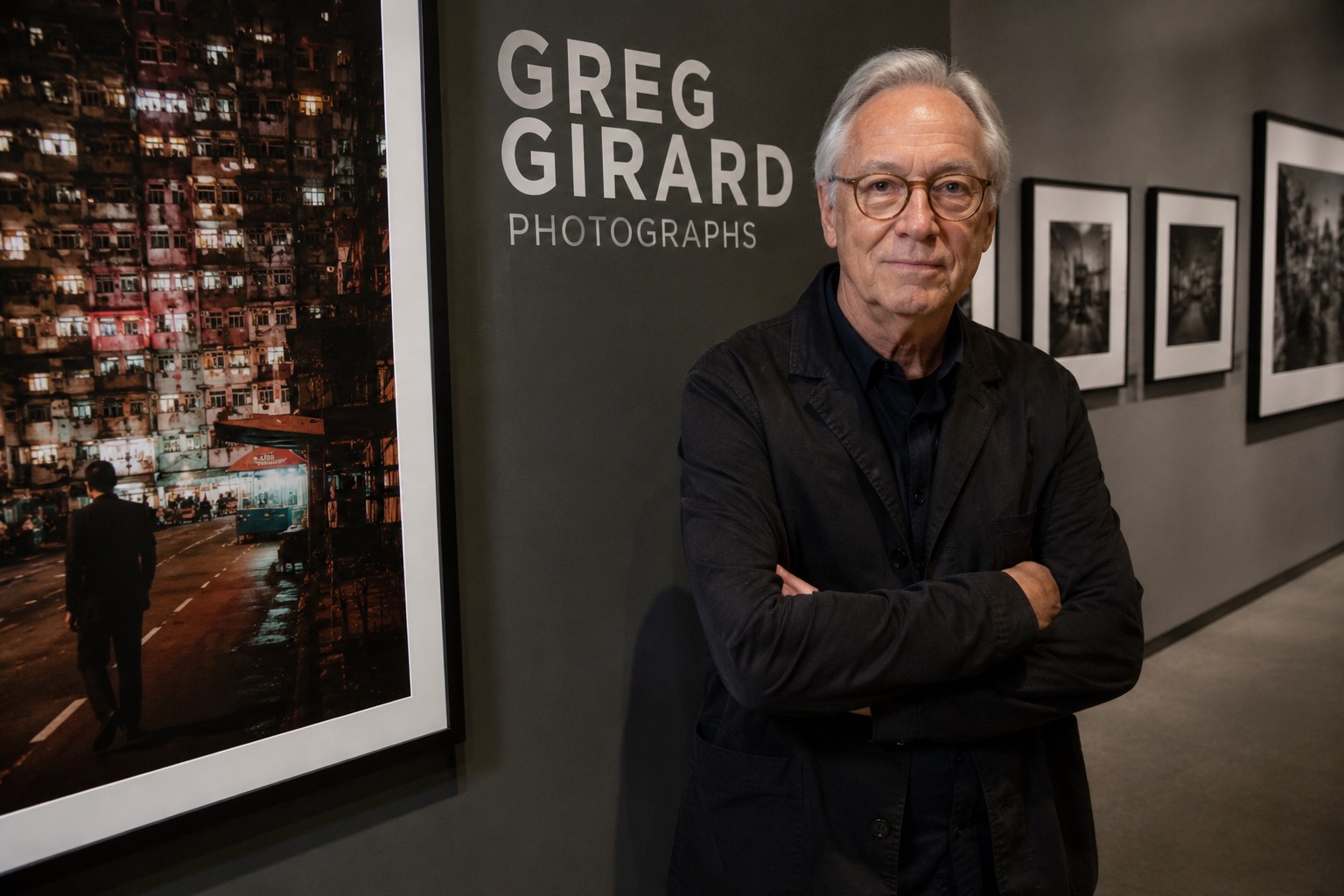
The element of surprise remains one of the great pleasures of visiting an art exhibition. A single image can stop viewers in their tracks, creating a brief but powerful emotional reaction.
That experience is at the heart of Greg Girard, the first major career survey of the celebrated Vancouver photographer’s work, now on display at the Polygon Gallery in North Vancouver. Co-curated by Polygon director Reid Shier and curator Elliott Ramsey, the exhibition spans approximately five decades of Girard’s career and explores the many creative chapters of his life.
The scale of the exhibition is notable. Despite Girard’s international reputation, he has never previously been the subject of a full career survey. Shier has suggested that artists from Vancouver often need to achieve recognition elsewhere before receiving the same level of attention at home.
Girard began photographing Vancouver as a teenager, focusing on the city’s Downtown Eastside, waterfront and dock areas during the 1970s. Unable to enter many of the bars and establishments he wanted to document, he sometimes rented inexpensive hotel rooms to spend time observing the communities around him. At that stage, photography was something he pursued primarily for himself.
The resulting images offer a vivid portrait of a Vancouver that has largely disappeared. Neon-lit diners, aging hotel lobbies, railway station washrooms and gritty neighbourhood scenes evoke a rougher, more atmospheric city. For viewers who remember places such as the old Aristocratic diner on Granville Street, the photographs can carry a powerful sense of nostalgia.
Yet Girard’s career would eventually take him far beyond Vancouver.
Inspired as a teenager by Eliot Elisofon’s photograph Hong Kong Harbour, Girard travelled across the Pacific in 1974. His time in Hong Kong, Shanghai and Beijing would later produce the work for which he became internationally known.
His photographs captured cities undergoing dramatic transformation. In Shanghai, he documented elegant older buildings falling into disrepair while modern skyscrapers rose behind them, symbols of a rapidly changing China. These images later formed part of the acclaimed collection Phantom Shanghai.
Girard is perhaps best known for his work documenting Kowloon Walled City in Hong Kong. Photographed over many years, the images later became the basis of City of Darkness: Life in Kowloon Walled City, later reissued as City of Darkness Revisited.
Kowloon Walled City was often portrayed as a chaotic and lawless urban maze. Girard’s photographs, however, revealed a more complicated reality. Behind the overcrowding and criminal activity were ordinary people raising families, running businesses and building everyday lives in one of the most densely populated places on Earth.
One of Girard’s favourite memories from that period involves an image he never managed to capture. He once followed an airline stewardess who had entered the Walled City with her suitcase, expecting to photograph her. She disappeared into the maze of alleyways before he could take the picture.
That missed photograph reflects something central to Girard’s work: the photographer is often an observer standing just outside the moment. His images document history, but they also leave room for mystery. A gesture, a glance or a fragment of a scene can suggest an entire story without revealing exactly what happened before or after.
Girard’s work has been compared with photographers associated with Vancouver’s influential art scene, including Fred Herzog and members of the Vancouver School. His background in photojournalism, however, gave his images a different quality. Time, history and narrative are embedded in his photographs, while his position as an observer creates a certain distance between the photographer and the people he documents.
That distance is one of the defining characteristics of Girard’s work. His photographs can feel cool and detached rather than emotionally overwhelming. Unlike photographers who are deeply embedded in the communities they photograph, Girard often appears to remain on the edge of the scene, watching carefully without becoming part of it.
His early Vancouver photographs offer an especially interesting example of this perspective. As a young photographer from Burnaby, Girard could move through some of the city’s rougher neighbourhoods without attracting much attention. His age made him seem harmless, allowing him to observe places and people who might otherwise have been wary of a photographer.
The result is a body of work that feels both intimate and separated. Girard’s photographs show a young man attempting to understand the world around him, while the images themselves retain a sense of distance and restraint.
Comments (0)
Sign in to join the conversation.