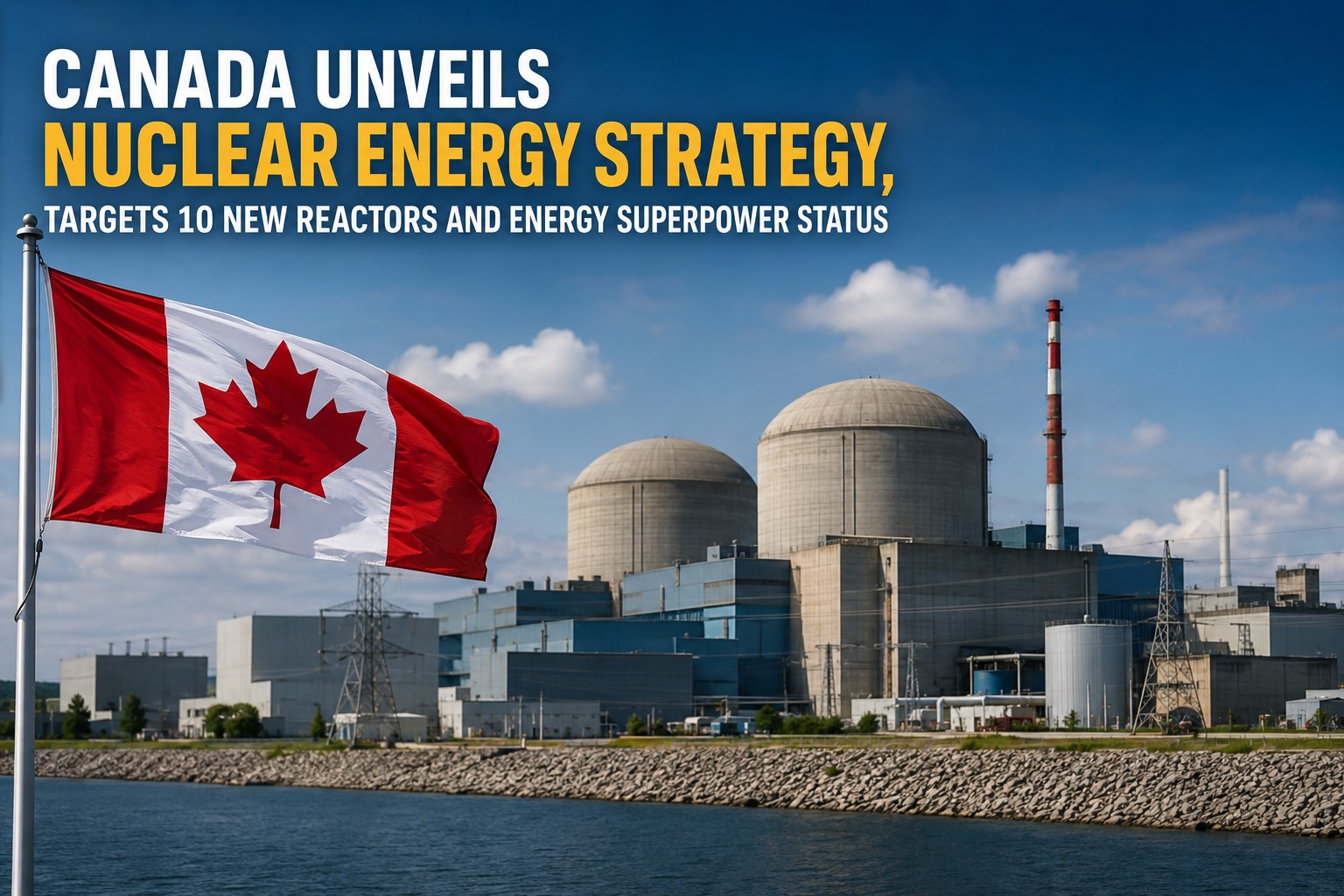
Canada has launched a new Nuclear Energy Strategy, outlining plans to expand domestic nuclear capacity and strengthen its position as a global energy leader.
Announced Monday by Energy and Natural Resources Minister Tim Hodgson in Newmarket, Ontario, the 23-page strategy is designed to unlock Canada’s energy potential through new reactor construction, increased exports, uranium development, and nuclear innovation.
The strategy is built around four priorities: enabling new nuclear builds, becoming a preferred supplier and exporter, expanding uranium and nuclear fuel opportunities, and advancing next-generation nuclear technologies.
Hodgson described the plan as a coordinated approach to growing Canada’s nuclear sector both domestically and internationally.
The federal government aims to support the construction of up to 10 new large-scale reactors across Canada, with two expected to begin construction by 2035 and five more planned or under development by 2040. The strategy also targets a modernized and cost-competitive CANDU reactor design by 2030.
The announcement follows the government’s broader clean electricity agenda, which seeks to double Canada’s electricity grid capacity by 2050.
Officials say nuclear power will play a central role in delivering reliable, low-emission electricity while supporting economic growth. The government estimates the nuclear workforce could grow from roughly 90,000 direct and indirect jobs today to more than 180,000 over the next decade.
Among the projects highlighted was the Darlington New Nuclear Project in Ontario, which is expected to provide power for approximately 300,000 homes while supporting thousands of jobs during construction and operation.
While the strategy does not allocate dedicated funding for individual projects, officials noted that financing options could come through existing federal investment programs, with total capital requirements potentially exceeding $100 billion.
The announcement drew political attention as Conservative Leader Pierre Poilievre questioned whether the strategy would lead to concrete development outcomes, saying implementation not announcements will determine success.
Canada’s government says the strategy marks the next phase of the country’s long-standing nuclear industry and positions it to compete in the growing global clean energy market.



Comments (0)
Sign in to join the conversation.