Can Watching Films in Galleries Surpass the Traditional Theatre Experience?
Film has long belonged to the cinema — dark rooms, fixed schedules, comfortable seats, and an uninterrupted beginning-to-end experience. But galleries are increasingly challenging that idea, offering audiences a different way to engage with moving images.
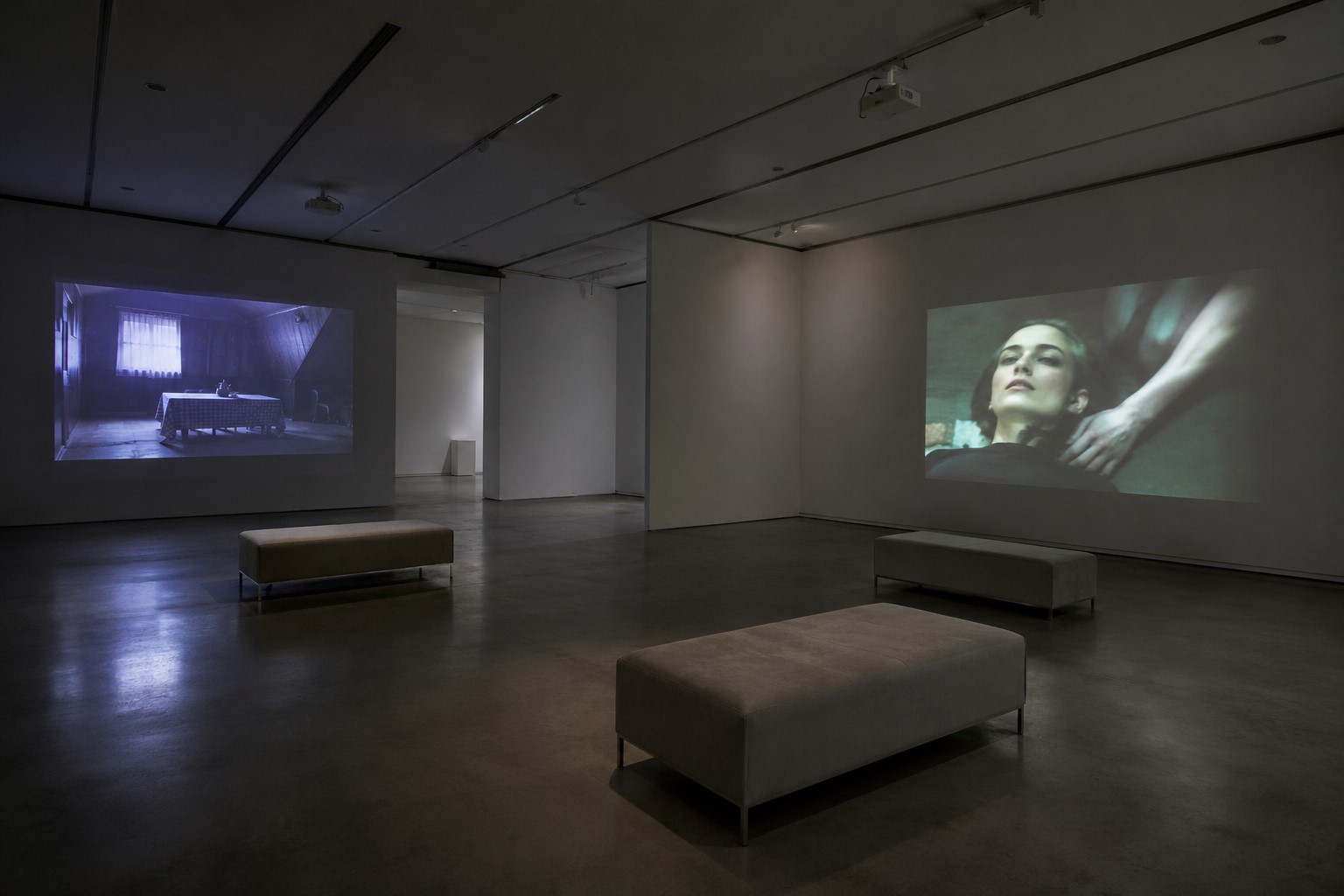
This summer’s exhibitions in Toronto highlight how film can shift when moved into gallery spaces. Rather than demanding full attention from start to finish, gallery screenings invite visitors to enter and leave freely, transforming film into something closer to an installation or physical object.
Italian artist Diego Marcon embraces this contrast. While he describes traditional cinemas as the ideal environment for watching films, his gallery works suggest that incomplete viewing can become part of the artistic experience. Instead of expecting audiences to remain until the credits, his installations allow films to exist independently of the viewer.
His exhibition The Bubble Boy presents short works that combine domestic imagery with surreal and unsettling elements. Through carefully designed spaces, natural light, and looping projection, the films become part of the gallery environment rather than standalone narratives.
A similar approach appears in artist Sara Cwynar’s Baby Blue Benzo, where visitors can enter at any point and experience fragmented moments that mirror the way people consume media today — moving between images, stories, and distractions without context.
Unlike traditional theatre screenings that prioritize narrative immersion, gallery film experiences encourage audiences to notice construction, presentation, and visual language. The setting itself becomes part of the artwork.
Physical installations surrounding the films further extend that experience, combining photography, objects, design, and spatial arrangement to create something cinema rarely attempts.
Rather than replacing theatres, gallery screenings offer an alternative way of engaging with film — one that values atmosphere, interpretation, and the freedom to experience art on individual terms.
The result is not necessarily a better experience than cinema, but a different one: less about finishing a story and more about observing how images shape meaning.

Comments (0)
Sign in to join the conversation.