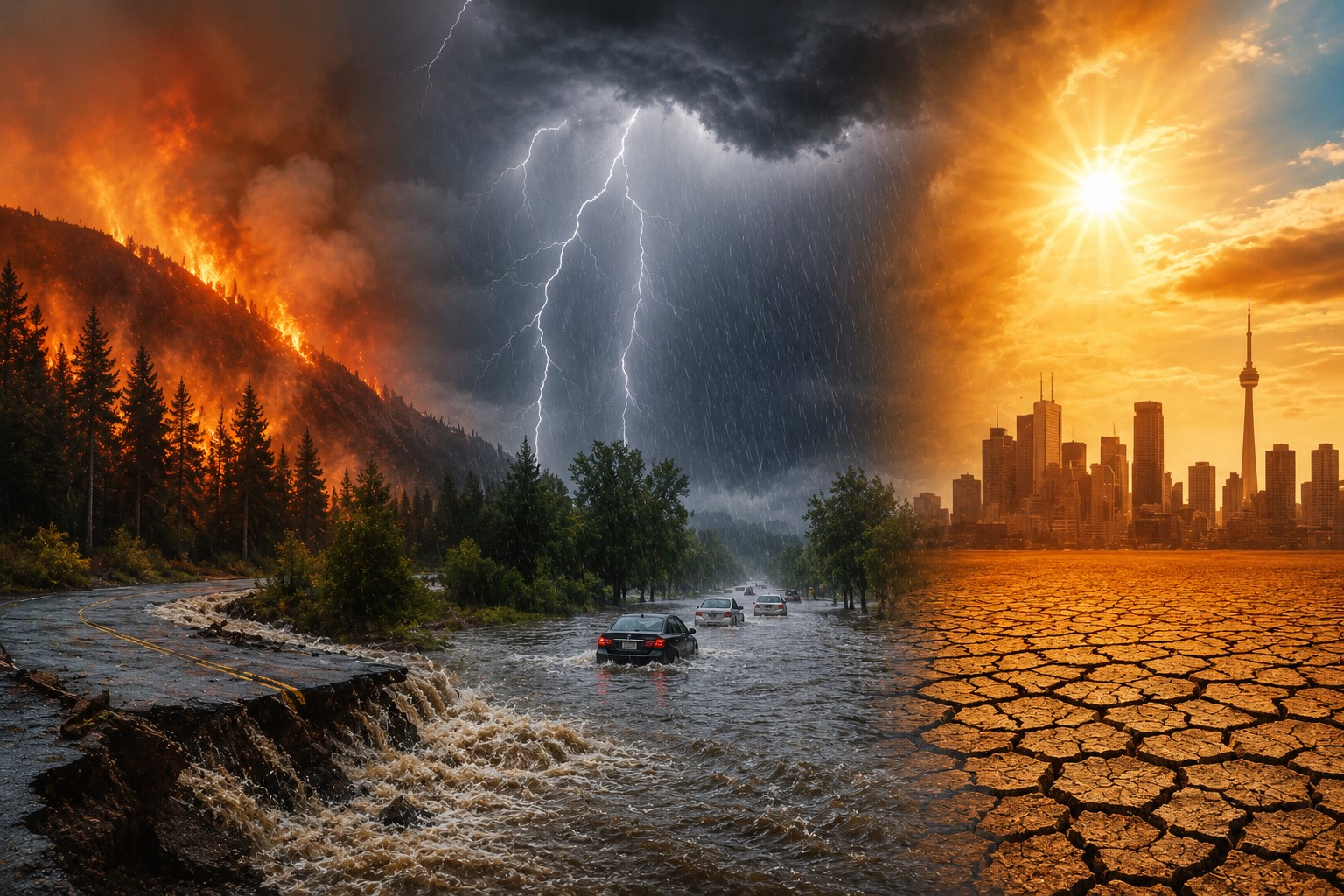
Canadians across the country are experiencing an unusually turbulent summer marked by heatwaves, flooding, wildfires, severe thunderstorms, and rapidly changing weather conditions. From Western Canada to the Atlantic provinces, communities have been impacted by a series of extreme weather events that experts say are being influenced by multiple atmospheric factors.
In Western Canada, powerful storms have triggered flooding in several areas, particularly in Manitoba. Meanwhile, parts of Ontario, Quebec, and British Columbia have faced prolonged heatwaves and thunderstorm alerts, while northern regions continue to battle widespread wildfires. Recent storms have also caused significant property damage, including homes damaged by high winds and severe thunderstorms that disrupted Canada Day celebrations in parts of the country.
Meteorologists say Canada's weather is naturally variable, making it common for different regions to experience vastly different conditions at the same time. However, this summer's unusual combination of intense heat, heavy rainfall, strong storms, and wildfire activity has drawn increased attention.
Experts point to several factors contributing to the extreme conditions. One is the jet stream, a fast-moving current of air high in the atmosphere that separates cold northern air from warmer southern air. When the jet stream slows down or becomes locked in place, it can create prolonged periods of heat, heavy rainfall, drought, or severe storms in different regions.
Another important influence is the developing El Niño weather pattern. El Niño occurs when sea surface temperatures in the central and eastern Pacific Ocean become warmer than normal. Although its strongest effects in Canada are usually felt during winter, the transition from several years of La Niña conditions to a strengthening El Niño may be contributing to this summer's unstable weather.
Climate change is also playing a significant role. Scientists say Canada is warming at roughly twice the global average, with Arctic regions warming even faster. Rising temperatures increase the likelihood of record-breaking heat, more intense rainfall, larger wildfires, and other extreme weather events.
Despite these contributing factors, weather experts caution that no single cause explains every event. Instead, Canada's extreme summer weather is the result of several atmospheric and climate influences working together, creating a season of heightened weather volatility across the country.



Comments (0)
Sign in to join the conversation.