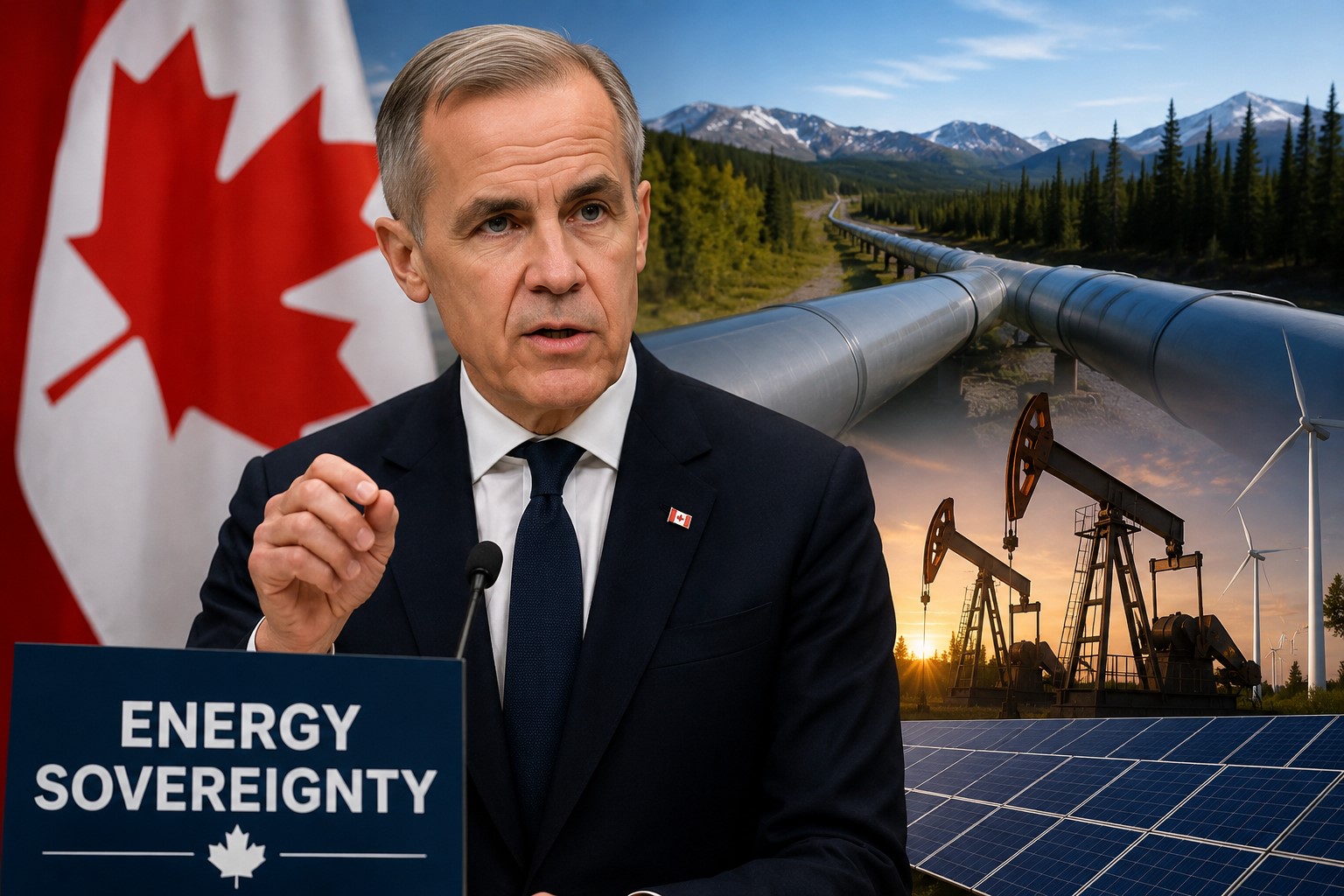
Prime Minister Mark Carney has made "energy sovereignty" a central part of Canada's economic strategy, arguing that the country must strengthen control over its energy future while reducing dependence on uncertain foreign markets. The policy gained momentum after renewed trade tensions with the United States, including tariff threats and political pressure from President Donald Trump.
Carney's plan focuses on expanding Canada's energy sector through increased oil and gas production, new export infrastructure, and investments in clean energy. His government recently backed plans for a proposed pipeline to Canada's West Coast, aimed at opening new export opportunities in Asia and reducing reliance on the U.S. market.
The prime minister says Canada faces three major energy challenges: affordability, energy security, and climate change. While he supports expanding conventional energy exports, he also maintains that Canada will continue investing in renewable power, nuclear energy, hydroelectricity, and electrification to meet long-term climate goals.
However, the strategy has sparked debate among energy experts and environmental groups. Critics argue that "energy sovereignty" traditionally refers to ensuring reliable and affordable domestic energy supplies, whereas Canada's approach is focused largely on increasing fossil fuel exports.
Some analysts believe higher oil production could strengthen the economy in the short term, while others warn that investing heavily in fossil fuels may leave Canada vulnerable as global demand gradually shifts toward renewable energy. Environmental advocates also question whether expanding oil production is compatible with Canada's emissions targets and climate commitments.
Supporters of the strategy point to countries such as Norway, which has used oil revenues to invest in clean energy and diversify its economy. They argue Canada could follow a similar path by using energy profits to fund the transition to a lower-carbon future.
As global energy markets evolve, the debate over Canada's energy sovereignty is expected to remain at the centre of discussions on economic growth, energy security, and climate policy.

Comments (0)
Sign in to join the conversation.