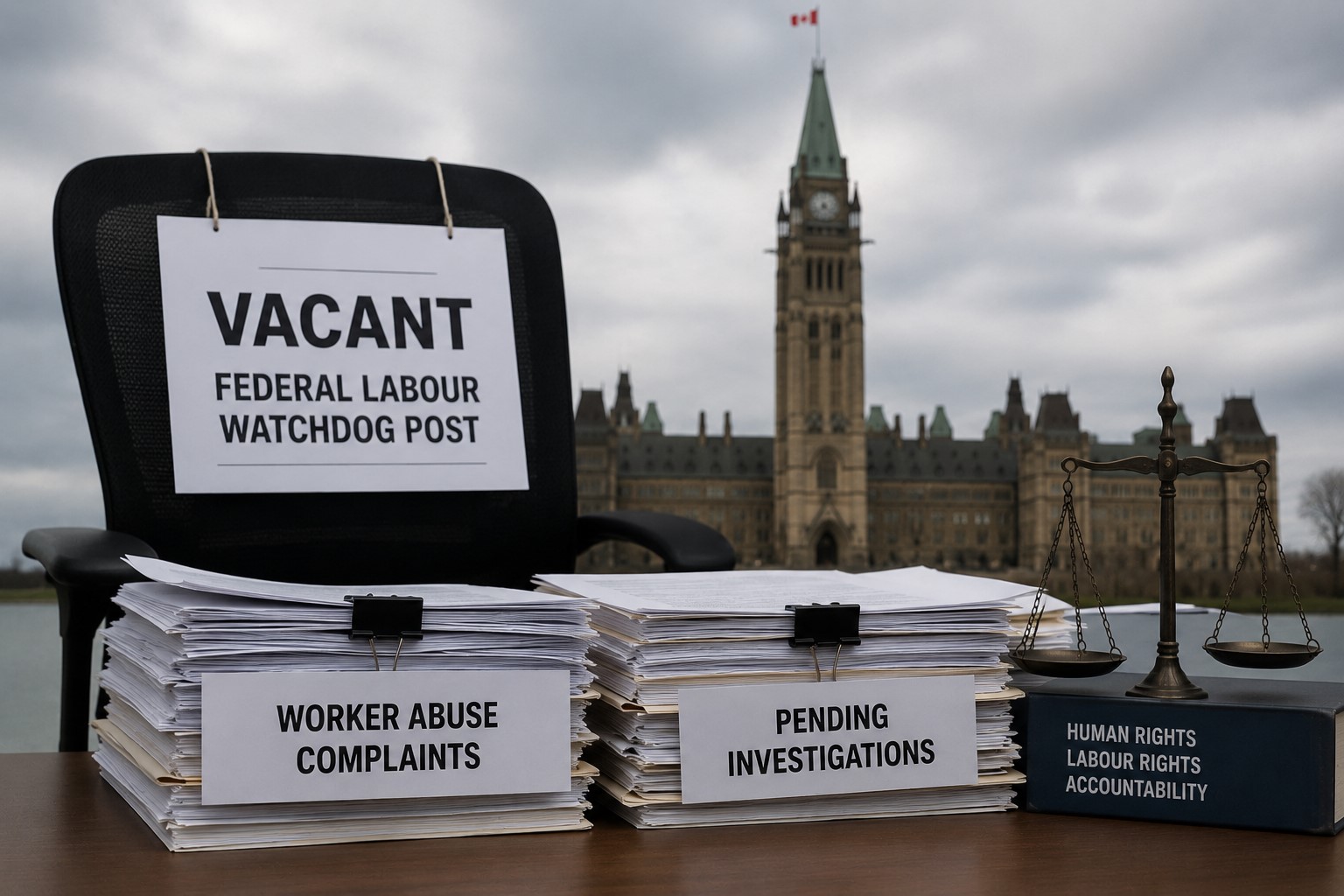
Vacant Federal Labour Watchdog Post Fuels Growing Backlog of Worker Abuse Complaints
More than a year after Canada’s federal corporate labour watchdog position became vacant, a growing backlog of complaints alleging labour exploitation and human rights abuses by Canadian companies operating overseas remains unresolved.
Documents recently tabled in Parliament reveal that 22 active complaints are awaiting review by the Canadian Ombudsman for Responsible Enterprise, a position that has remained unfilled since May 2025. The complaints involve allegations against companies in the garment, mining, and oil and gas sectors, raising concerns about accountability and oversight of Canadian business operations abroad.
According to the government’s response to Parliament, the backlog includes complaints involving 10 garment manufacturers, 10 mining companies and two oil and gas firms. Most of the cases are linked to operations in Asia and Africa, regions where labour rights and workplace conditions have frequently come under international scrutiny.
Only a small number of complaints had progressed to the formal investigation stage when the figures were compiled, highlighting concerns that unresolved cases may continue to accumulate without permanent leadership in the watchdog office.
The disclosure followed questions raised by Conservative Member of Parliament Arnold Viersen, who criticized the government for both the vacancy and the absence of annual reports from the office since 2022. Viersen argued that Parliament and the public deserve access to information regarding allegations of forced labour, exploitation and modern slavery involving Canadian companies abroad.
The Canadian Ombudsman for Responsible Enterprise was established in 2018 following years of advocacy from human rights organizations seeking stronger oversight of Canadian corporations operating internationally. The office was tasked with reviewing complaints related to labour abuses, human rights violations and unethical business practices.
The watchdog position was created partly in response to growing global concern over corporate accountability following incidents such as the 2013 Rana Plaza factory collapse in Bangladesh, which killed more than 1,100 garment workers and sparked calls for greater transparency in international supply chains.
Comments (0)
Sign in to join the conversation.