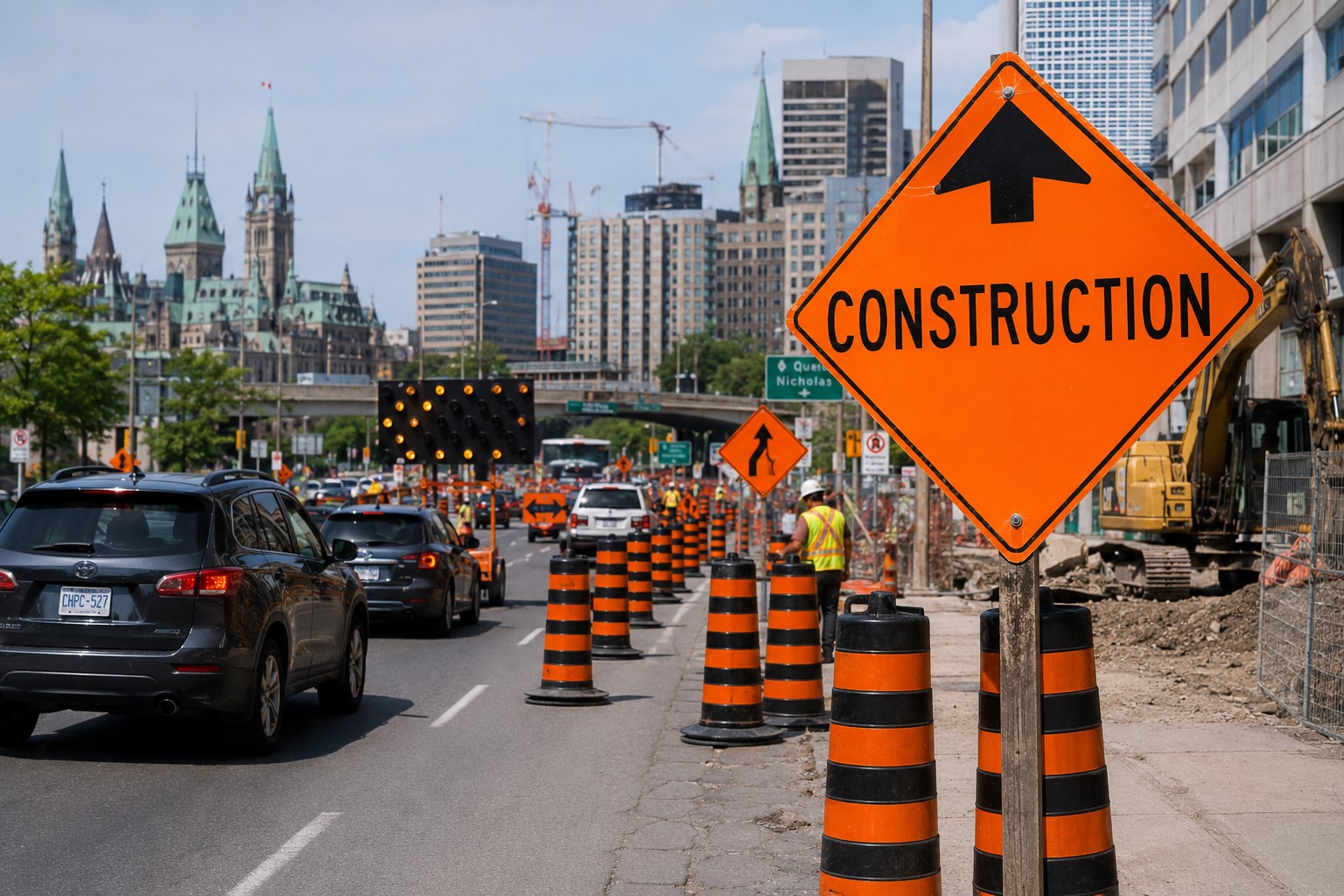
Summer construction has become a familiar sight across Ottawa, with road closures, detours, and infrastructure work affecting commuters and residents throughout the city. As hundreds of projects move forward each year, concerns are growing that poor coordination between different agencies is creating unnecessary delays and confusion.
The City of Ottawa oversees roughly 700 municipally funded infrastructure projects annually. Its 2026 budget includes nearly $691.3 million for investments in roads, bridges, sidewalks, parks, buildings, and pathways. These projects are separate from highway work managed by the Ontario Ministry of Transportation, construction on National Capital Commission property, and utility upgrades carried out by organizations such as Hydro Ottawa.
According to College Ward Councillor Laine Johnson, the lack of a centralized coordination system means projects managed by different organizations often overlap. She said separate departments and agencies use different planning systems, timelines, and management structures, making it difficult to avoid scheduling conflicts.
Johnson pointed to recent examples where provincial lane closures on Highway 417 coincided with ongoing LRT construction near Pinecrest and Holly Acres. At the same time, another city project proposed a detour through an intersection already affected by construction, increasing the risk of congestion and travel delays.
She believes responsibility for coordinating projects is spread across multiple departments, leaving no single office accountable for ensuring construction schedules work together. As a result, residents often experience unnecessary disruptions and confusion while navigating the city.
The councillor is now urging Ottawa to improve how construction projects are planned and communicated. She says modern technology should make it possible to better coordinate projects and provide residents with timely information about road closures and traffic impacts.
The idea of creating a centralized coordination office is not new. During Ottawa's municipal amalgamation in 2001, consultants recommended establishing a municipal operations coordination centre to oversee major infrastructure projects across the city. However, the proposal was never implemented.
One of the consultants involved in that study, Sandy McQuarrie, said the lack of centralized planning has contributed to many of the same coordination challenges that continue to affect the city today. He noted that similar coordination offices already operate successfully in several major North American cities, including Toronto.
In response, Ottawa officials say city staff regularly work with internal departments, utility companies, and external partners to coordinate construction activities. The city is also exploring new technology, including a comprehensive mapping tool that would track municipal, provincial, federal, utility, and private development projects in one system.
While officials have not announced a timeline for introducing the new platform, Johnson hopes discussions at committee and council will help accelerate improvements. She believes a more coordinated approach could reduce traffic disruptions, improve communication with residents, and make infrastructure projects more efficient across Ottawa.

Comments (0)
Sign in to join the conversation.