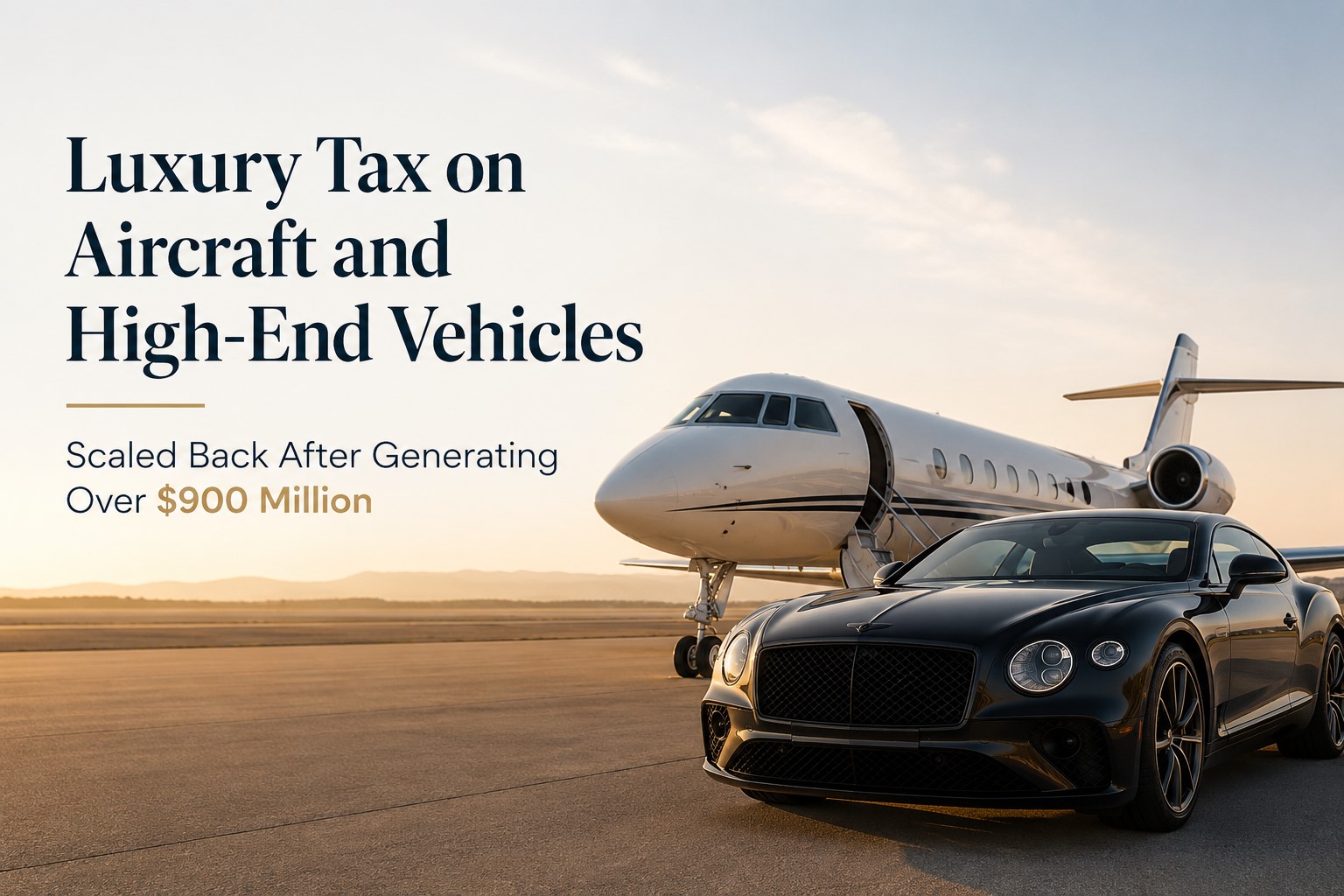
A luxury tax introduced to target high-value purchases such as private aircraft, luxury vehicles, and recreational boats has generated more than $900 million in government revenue since its implementation. However, policymakers have now moved to scale back parts of the tax amid concerns about its impact on businesses, manufacturers, and consumer demand.
The tax was originally designed to ensure that wealthier consumers contributed more to public finances when purchasing expensive goods. It applied to new luxury vehicles, aircraft, and vessels exceeding specified price thresholds, with buyers required to pay an additional tax on qualifying purchases.
Government officials say the measure has successfully generated significant revenue while supporting broader fiscal objectives. Since taking effect, the tax has brought in more than $900 million, exceeding some early projections and demonstrating strong demand for luxury products despite the additional costs.
However, industry groups have argued that the policy has had unintended consequences. Manufacturers, dealerships, and aviation businesses have reported reduced sales activity, delayed purchases, and increased challenges in competing with international markets that do not impose similar taxes.
In response to these concerns, authorities have announced changes aimed at easing the burden on certain sectors. The revised policy reduces or removes some luxury tax requirements, particularly for aircraft purchases, while maintaining aspects of the tax on other high-end consumer goods.
Supporters of the adjustment argue that the move will help protect jobs, encourage investment, and improve competitiveness without eliminating an important source of government revenue. Critics, however, contend that scaling back the tax could reduce its effectiveness in ensuring that affluent consumers contribute their fair share.
The debate highlights the ongoing challenge for policymakers: balancing revenue generation with economic growth and industry competitiveness. As governments continue to review the policy's impact, businesses and consumers alike will be watching closely to see how the changes affect luxury markets in the years ahead.

Comments (0)
Sign in to join the conversation.