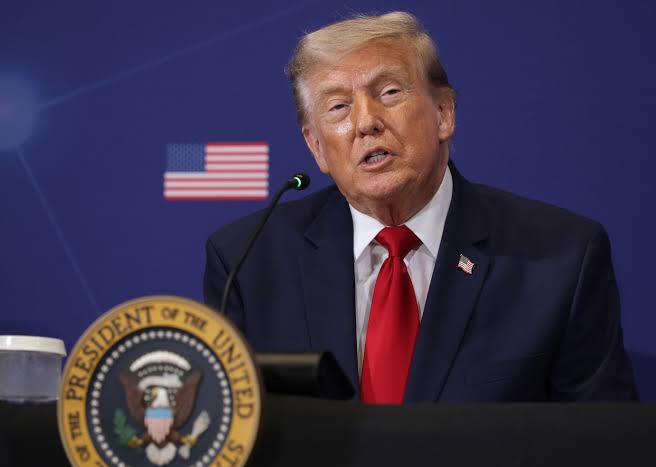
U.S. President Donald Trump used a nationally televised address on Thursday to renew claims that the 2020 presidential election was compromised, alleging that China interfered in the election and that the American voting system remains vulnerable to fraud. During the speech, Trump announced the release of newly declassified intelligence documents, arguing they support his long-standing concerns about election integrity.
However, a review of the documents and previously released U.S. intelligence assessments shows that several of Trump's claims are not supported by the available evidence.
Claims About Chinese Election Interference
Trump alleged that China obtained millions of U.S. voter records and attempted to influence the outcome of the 2020 election. While some voter registration information is publicly available through state election offices, intelligence agencies have previously stated there is no evidence that foreign governments altered voter registrations, ballots, vote counts or election results.
A 2021 U.S. intelligence assessment concluded that no foreign actor successfully changed any technical aspect of the 2020 election, despite attempts by several countries to influence public opinion.
What the Declassified Documents Show
The documents released by the White House discuss potential foreign threats from countries including China, Russia and Iran. They note that these nations possessed the capability to conduct cyber operations or influence campaigns but do not conclude that China directly interfered with vote counting or changed the election outcome.
One assessment states that China preferred Trump to lose the election and sought to shape public opinion online. However, it also concludes that Beijing did not launch operations intended to alter the final election results. The same intelligence reports also describe Russian efforts aimed at boosting Trump's candidacy, an aspect not addressed during the president's speech.
Election Infrastructure and Mail-In Voting
Trump also warned that voter registration databases, election websites and voting systems remain vulnerable to cyberattacks. Intelligence assessments acknowledge these systems face potential threats but note that successfully altering election results on a large scale would be highly difficult.
The president again criticized mail-in voting, calling it vulnerable to fraud and promising stricter limits. However, there is no evidence presented by Trump showing that mail-in ballots led to widespread election fraud in 2020. Election officials and multiple court rulings have consistently found no proof of widespread fraud capable of changing the election outcome.
Continuing Debate Over Election Security
Trump's latest remarks have reignited debate over election security and public confidence in the U.S. voting system. While the administration argues additional safeguards are needed, intelligence findings released over recent years continue to conclude that the integrity of the 2020 election was not compromised through foreign interference or widespread fraud.



Comments (0)
Sign in to join the conversation.