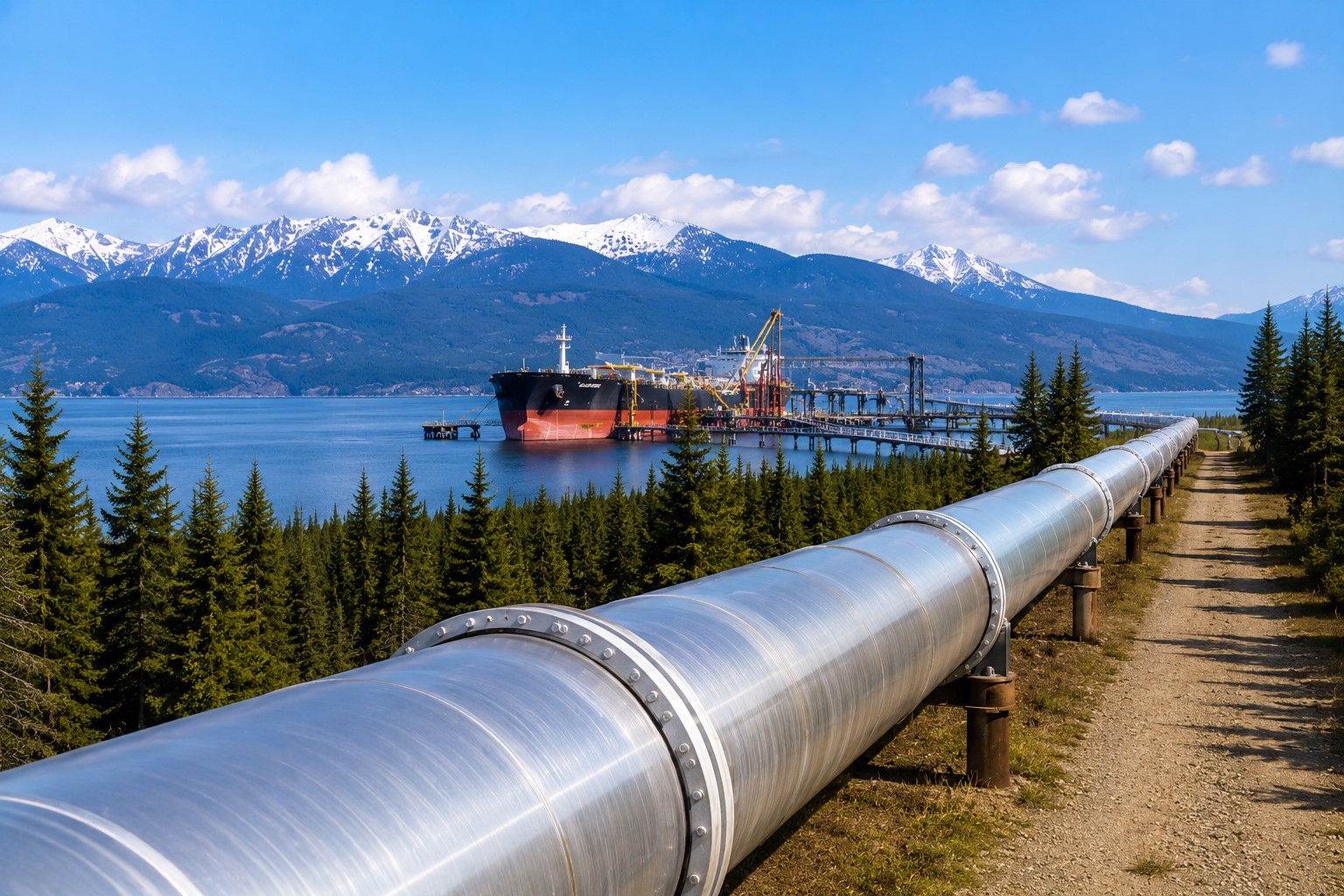
CALGARY: Enbridge President and CEO Greg Ebel says Canada’s long-term energy future depends more on increasing oil production than on constructing new pipelines, arguing that supply growth is the foundation for any major expansion in energy exports.
Speaking on a podcast in Calgary, Ebel said recent public debate has focused too heavily on pipeline construction while overlooking the larger challenge of boosting oil production.
His remarks come days after the Alberta government asked Ottawa to designate a proposed crude oil pipeline to British Columbia’s West Coast as a project of national interest. The proposed pipeline would transport more than one million barrels of oil per day from Alberta to a deep-water export terminal on the B.C. coast, providing greater access to Asian markets.
The proposed route would largely follow the existing Trans Mountain pipeline corridor.
Alberta Premier Danielle Smith has linked the project to the province’s goal of increasing oil production to eight million barrels per day within the next decade. Ebel said discussions between governments and energy producers are ongoing regarding future production capacity, though details have yet to be finalized.
According to Ebel, increasing production is the essential first step before investing in additional pipelines or refining capacity.
"If production doesn't grow, there will be no need for additional infrastructure," he argued, adding that discussions should focus on future energy demand rather than current transportation capacity.
Ebel also suggested that stronger production could eventually require expanded refinery capacity in eastern Canada, potentially creating new opportunities for provinces such as Ontario and Quebec.
The Enbridge chief warned that regulatory certainty remains one of the biggest obstacles preventing companies from making long-term investment decisions. He echoed concerns previously raised by other industry leaders that governments must provide stable and predictable policies before companies commit billions of dollars to new projects.
He cited estimates indicating that expanding Canada's oil production and export infrastructure—including upstream development, pipelines, export terminals and related facilities—could require investments of around $100 billion.
Responding to critics who argue existing infrastructure, including the expanded Trans Mountain pipeline, provides sufficient export capacity, Ebel said current pipeline networks remain heavily utilized and continue to face capacity constraints.
He noted that Enbridge has experienced months of pipeline apportionment, meaning demand from producers has exceeded available pipeline space


Comments (0)
Sign in to join the conversation.