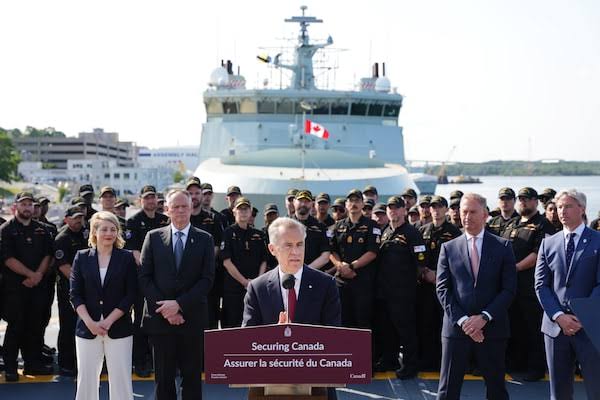
Canada has officially selected German shipbuilder TKMS (Thyssenkrupp Marine Systems) to construct its next generation of submarines, marking one of the country's largest defence procurement decisions in decades. The agreement will see Ottawa acquire up to 12 Type 212CD diesel-electric submarines, reinforcing Canada's naval capabilities while strengthening defence cooperation with NATO allies Germany and Norway.
The decision follows a highly competitive bidding process between Germany's TKMS and South Korea's Hanwha Ocean. Although Hanwha actively promoted its proposal by sailing one of its submarines to Canada's West Coast and announcing numerous partnerships with Canadian businesses, the federal government ultimately selected the German-led bid. The choice reflects Canada's preference for deeper integration with existing NATO defence programs and long-term collaboration with European allies.
Canada's selection also means joining the established submarine partnership between Germany and Norway, where both countries cooperate on the design, construction, and long-term maintenance of the advanced Type 212CD submarine platform. The project is expected to benefit from shared expertise, established supply chains, and coordinated industrial capabilities across participating nations.
The first submarines are expected to begin entering service before 2035, replacing Canada's aging fleet and significantly improving the Royal Canadian Navy's underwater surveillance and defence capabilities. The modern diesel-electric submarines feature advanced stealth technology, extended operational range, and improved endurance for missions in both Arctic and international waters.
Beyond strengthening national defence, the agreement is expected to generate substantial economic benefits for Canada. According to projections released by German officials, the program could contribute approximately $86 billion to Canada's gross domestic product over the life of the project while creating more than 650,000 job-years across manufacturing, engineering, technology, maintenance, and related industries.
Throughout the procurement process, TKMS announced more than 20 public partnership agreements and memorandums of understanding with Canadian companies. These collaborations are expected to support domestic production, research, advanced manufacturing, supply chain development, workforce training, and long-term submarine maintenance. Company officials have also indicated that additional government-to-government arrangements and industrial partnerships, not publicly disclosed during the bidding process, will form an important part of the overall project.
As Canada moves into the implementation phase, attention now turns to converting these partnership agreements into tangible investments, employment opportunities, and industrial growth. The success of the program will depend not only on delivering a modern submarine fleet on schedule but also on ensuring that Canadian businesses and workers receive the long-term economic benefits promised through one of the country's most significant defence contracts.


Comments (0)
Sign in to join the conversation.