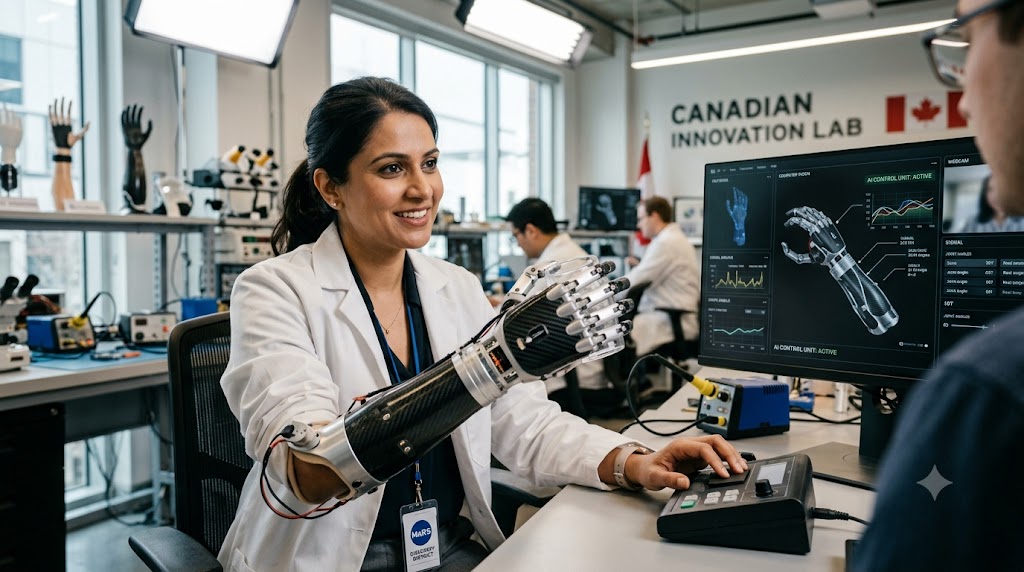
A Toronto-based technology startup is using artificial intelligence and computer vision to develop a more intuitive bionic arm, highlighting a new application of AI in Canadian health and accessibility technology.
smartARM is developing a vision-first bionic prosthetic that uses a camera embedded in the palm to recognize everyday objects. The system uses DINOv2, an open-source computer vision model, to help the prosthetic identify objects and automatically select an appropriate grip.
The startup is also using Meta AI Glasses and Meta's Wearables Device Access Toolkit as an optional source of additional first-person visual information. This can provide the system with more context about what a user is interacting with.
Unlike traditional prosthetic systems that can require users to manually switch between grip patterns, smartARM's technology is designed to allow the bionic arm to adapt its grip based on what it sees.
The development represents a growing intersection between Canadian artificial intelligence, wearable technology, computer vision and assistive devices.
smartARM says its approach is intended to make advanced prosthetic technology easier and more intuitive to use while exploring how AI-powered hardware can improve everyday accessibility.

Comments (0)
Sign in to join the conversation.