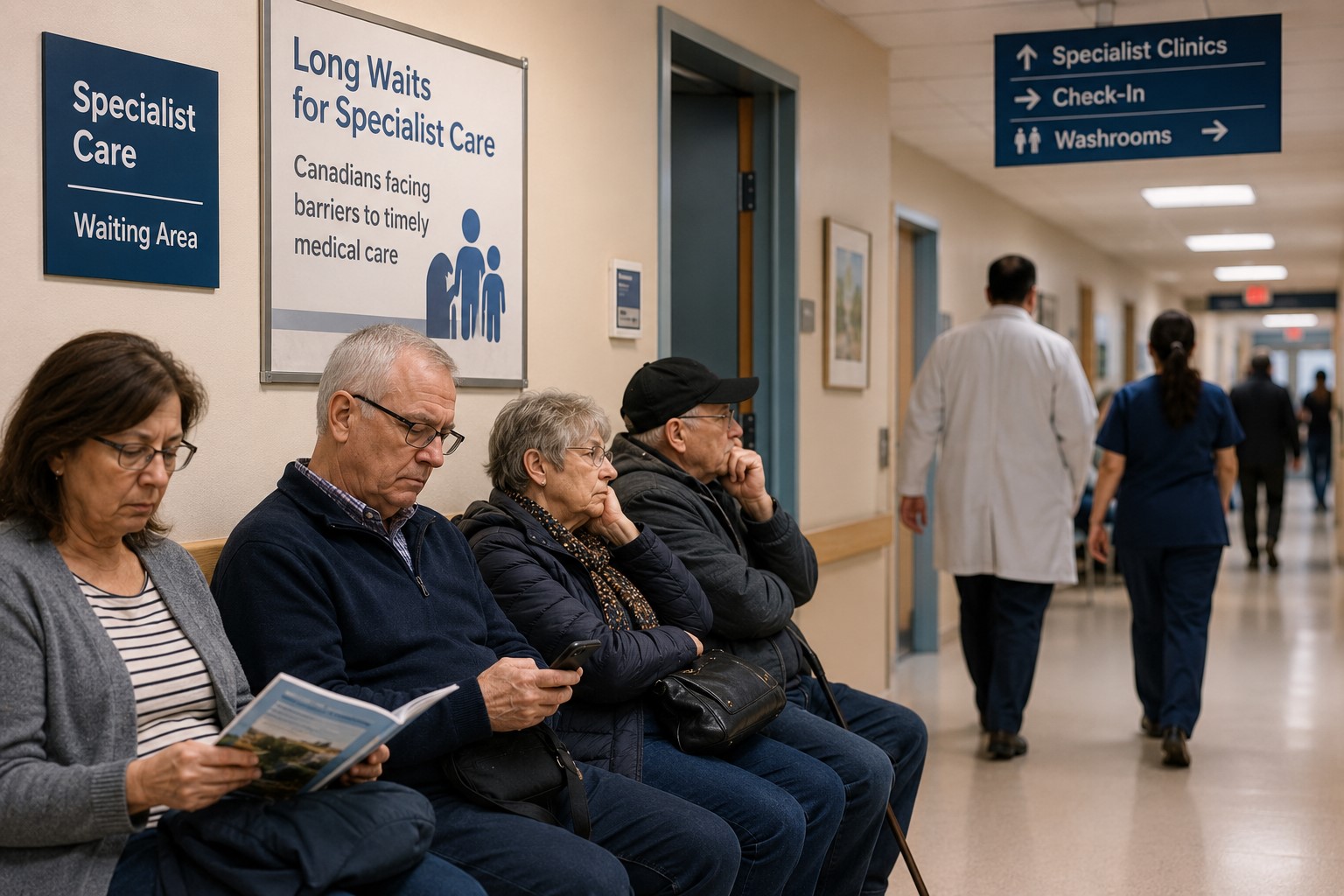
Millions of middle-aged and older Canadians are facing difficulties accessing specialist medical care, according to a new Statistics Canada report that highlights growing pressure on the country’s health-care system.
The report, based on 2024 survey data covering 17.2 million Canadians aged 45 and older, found that approximately 4.5 million people experienced problems accessing specialist care. Many struggled to secure appointments or faced waits of several months after being referred.
The findings raise concerns that access challenges could worsen as Canada’s population continues to age and more people require specialized treatment for complex health conditions.
Experts say several factors are contributing to the problem, including shortages of family doctors and specialists, outdated referral systems and limited tools to help health-care providers prioritize patients based on urgency.
Dr. Samir Sinha, a geriatrician and clinician scientist at Sinai Health and Toronto’s University Health Network, said one major barrier is the growing number of Canadians without a regular primary-care provider. Without a family doctor, patients can face additional difficulties obtaining referrals and navigating the specialist system.
The Statistics Canada report found that 6.6 million Canadians surveyed had used specialist care. The most common reasons included skin conditions, urological or gynecological problems and orthopedic issues.
The report also found that 2.9 million people had unmet health-care needs, meaning they were unable to receive care for a new physical or mental health condition or obtain appropriate treatment for an injury.
British Columbia Faces Major Specialist Care Pressures
British Columbia recorded the highest proportion of middle-aged and older Canadians reporting difficulties accessing specialist care. Experts say the province’s growing population and limited capacity have placed increasing pressure on the health system.
Neurologist Dr. Robert Carruthers said about 1.2 million people in British Columbia are currently waiting to see a specialist, with the number continuing to rise. He said the province has experienced rapid population growth over the past decade, while health-care services have struggled to expand at the same pace.
Carruthers also warned that some specialists are beginning to close their waitlists to non-urgent referrals.
Family physician Birinder Narang pointed to problems with the referral process, including a lack of specialists and outdated technology. He said fax-based referrals can be lost, sent to the wrong specialist or rejected because the necessary forms are incomplete.
Digitizing referrals could help reduce some of these problems, he said, by making the process more reliable and improving communication between doctors and specialists.
After British Columbia, Quebec and Newfoundland and Labrador had some of the highest proportions of residents reporting difficulties accessing specialist care.
Many Patients Face Months or Years of Waiting
Statistics Canada found that about 31 per cent of people aged 45 to 64 and 30.9 per cent of those aged 65 and older waited less than three months between receiving a referral and their first specialist consultation.
However, some patients faced significantly longer delays. Around seven per cent of middle-aged adults and five per cent of older adults reported waiting at least one year.
For some patients, the wait can stretch to two years. Pat Fulton, 72, from Calgary, said she was told she could wait between 20 and 24 months to see a specialist about severe arthritis affecting both hips.
She said the prolonged wait has contributed to increasing pain and discomfort, affecting other parts of her body as she compensates for her hip problems.
Comments (0)
Sign in to join the conversation.