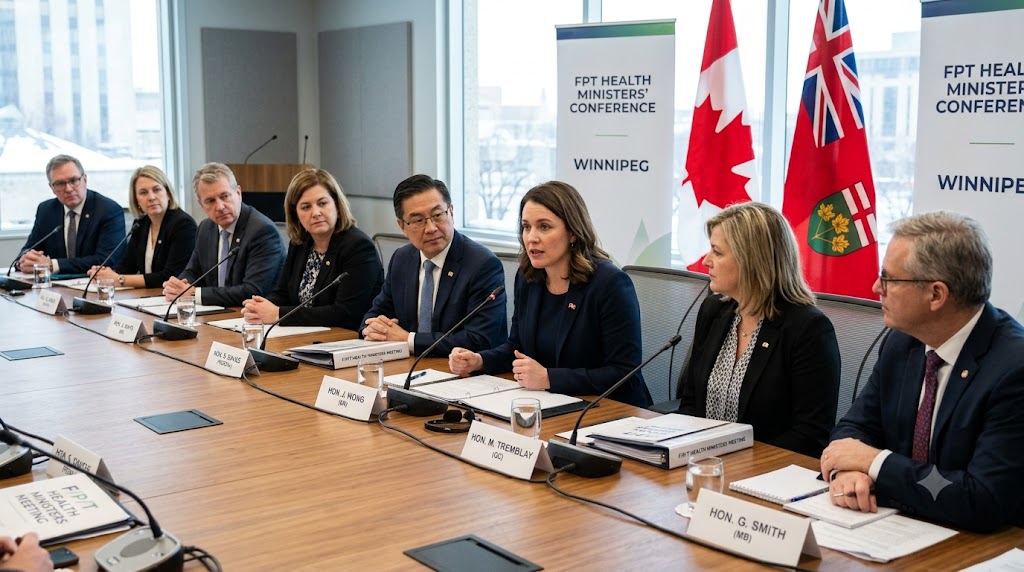
Canada’s provincial and territorial health ministers are calling for long-term federal health-care funding commitments, arguing that Ottawa’s planned one-year extension for mental health, addiction treatment and home care does not provide enough certainty for health systems.
The debate intensified during health ministers’ meetings in Winnipeg this week. Federal Health Minister Marjorie Michel announced an extension worth approximately C$1.2 billion, covering programs that had been scheduled to expire in 2027. The extension is intended to maintain funding for another year while governments consider longer-term arrangements.
Manitoba Health Minister Uzoma Asagwara said the extension was a positive first step but stressed that provinces and territories need more comprehensive commitments. Ontario Health Minister Sylvia Jones also raised concerns about the ability to plan services without reliable funding beyond the short term.
The funding supports important areas of Canada’s health-care system, including community-based mental health programs, addiction services and home and community care. Provincial and territorial leaders say uncertainty could affect service planning, staffing and the continuity of programs that patients and families rely on.
Ministers are also pressing Ottawa over the future growth rate of the Canada Health Transfer. The federal budget has set out a minimum annual growth rate of 3 per cent from 2028, down from the current 5 per cent guarantee. Provinces and territories want stronger, predictable funding arrangements.
The key issue now is whether federal and provincial leaders can reach a longer-term agreement that gives health authorities enough certainty to plan services, support health-care workers and maintain access to care across Canada. Further discussions are expected as governments work toward the upcoming federal budget.



Comments (0)
Sign in to join the conversation.