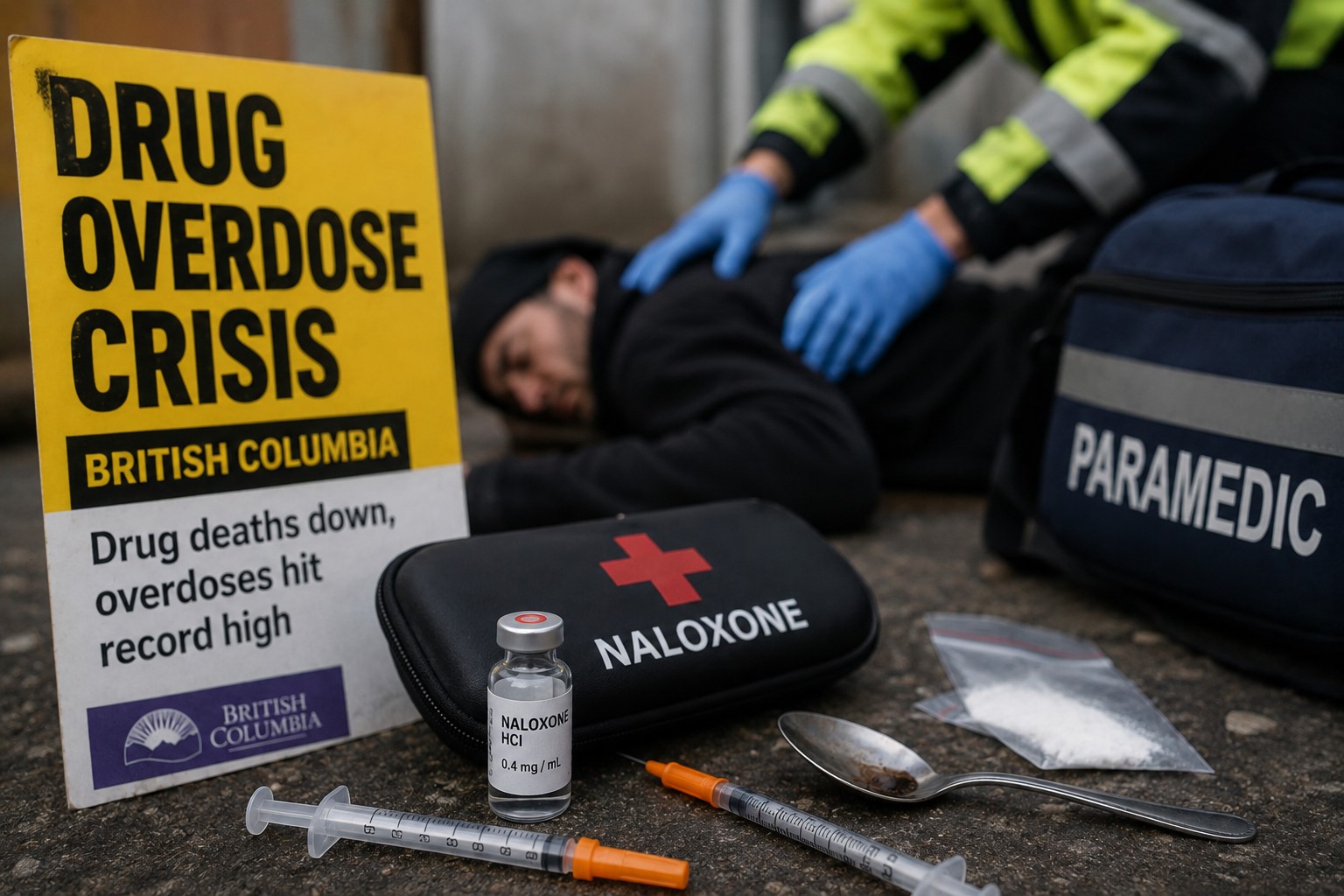
British Columbia has recorded a significant decline in drug-related deaths, even as overdose incidents continue to rise to record levels, highlighting the complex nature of the province's ongoing toxic drug crisis.
According to the BC Coroners Service, 109 people died from unregulated drug toxicity in May 2026, marking the lowest monthly death toll since February 2020. The figure represents a 55% decrease from the record 242 deaths reported in December 2023, when the province experienced the deadliest period of the overdose emergency.
Despite the encouraging decline in fatalities, emergency responders say the number of overdose incidents continues to climb. BC Emergency Health Services (BCEHS) reported responding to more overdose calls during the first half of 2026 than it handled throughout all of 2020, including a record 5,129 overdose calls in May alone.
Health experts believe the reduction in deaths cannot be attributed to a single factor. Instead, they point to a combination of expanded addiction treatment services, wider access to naloxone, supervised consumption sites, and improvements in emergency medical response.
Researchers have also observed changes in the composition of illicit drugs circulating in the province. While fentanyl remains the primary substance involved, increasing amounts of sedatives such as xylazine and medetomidine are being mixed into the drug supply. Experts say these substances may reduce the concentration of fentanyl, lowering the immediate risk of fatal respiratory failure but leaving users unconscious for extended periods and creating new medical risks.
The province's drug policies continue to spark political debate. Critics argue that British Columbia's decriminalization pilot coincided with the peak of the overdose crisis, while supporters maintain that harm reduction measures have helped save lives and should remain part of the public health response.
Former addict and recovery advocate Guy Felicella, who spent nearly two decades struggling with addiction in Vancouver's Downtown Eastside, welcomed the decline in deaths but stressed that the overdose crisis is far from over. He said long-term recovery requires not only access to treatment but also stable housing, mental health support, and opportunities to rebuild lives.
Public health officials emphasize that while fewer people are dying, the record number of overdoses demonstrates that the toxic drug crisis remains a major challenge. They say continued investment in prevention, treatment, and harm reduction will be essential to reducing both overdose incidents and fatalities in the years ahead.
Comments (0)
Sign in to join the conversation.