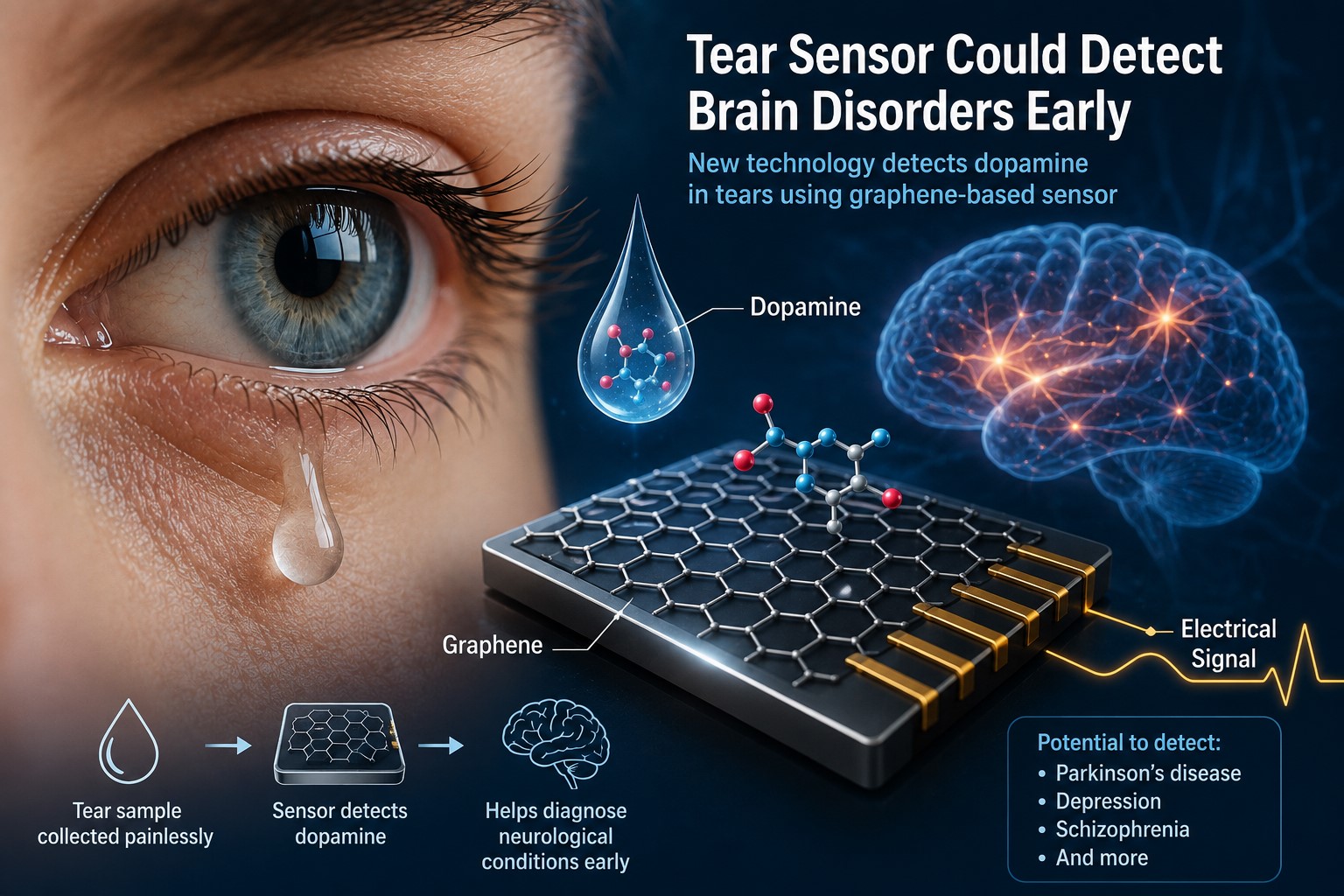
Scientists have developed a new sensor that can detect dopamine in human tears, a breakthrough that could lead to earlier and less invasive diagnosis of neurological and psychiatric disorders.
The technology, described in a study published by the American Chemical Society, uses a small, low-cost sensor to measure dopamine levels in tear samples. Researchers believe the innovation could eventually help identify conditions such as Parkinson’s disease, depression, and schizophrenia before major symptoms appear.
According to the research team, the goal is to create a simple diagnostic tool that allows doctors to detect changes in brain chemistry at a much earlier stage, giving patients access to timely treatment and intervention.
The sensor works by using a thin layer of graphene, a highly conductive form of carbon, combined with nickel to improve sensitivity. When dopamine in a tear sample comes into contact with the sensor, it produces an electrical signal that can be measured quickly and accurately.
In laboratory testing, the device successfully detected dopamine levels ranging from below normal to several times above healthy levels. Although the experiments were conducted using synthetic tears, researchers say the results demonstrate strong potential for future testing with real human tear samples.
Current methods of monitoring dopamine often require blood or urine tests and, in some cases, implanted medical devices. By comparison, collecting tears is painless, quick, and non-invasive, making it a more comfortable option for patients.
Researchers believe that with further clinical studies and development, tear-based testing could become a valuable tool for neurologists and psychiatrists, helping diagnose brain-related disorders earlier while reducing the need for expensive or invasive procedures.



Comments (0)
Sign in to join the conversation.