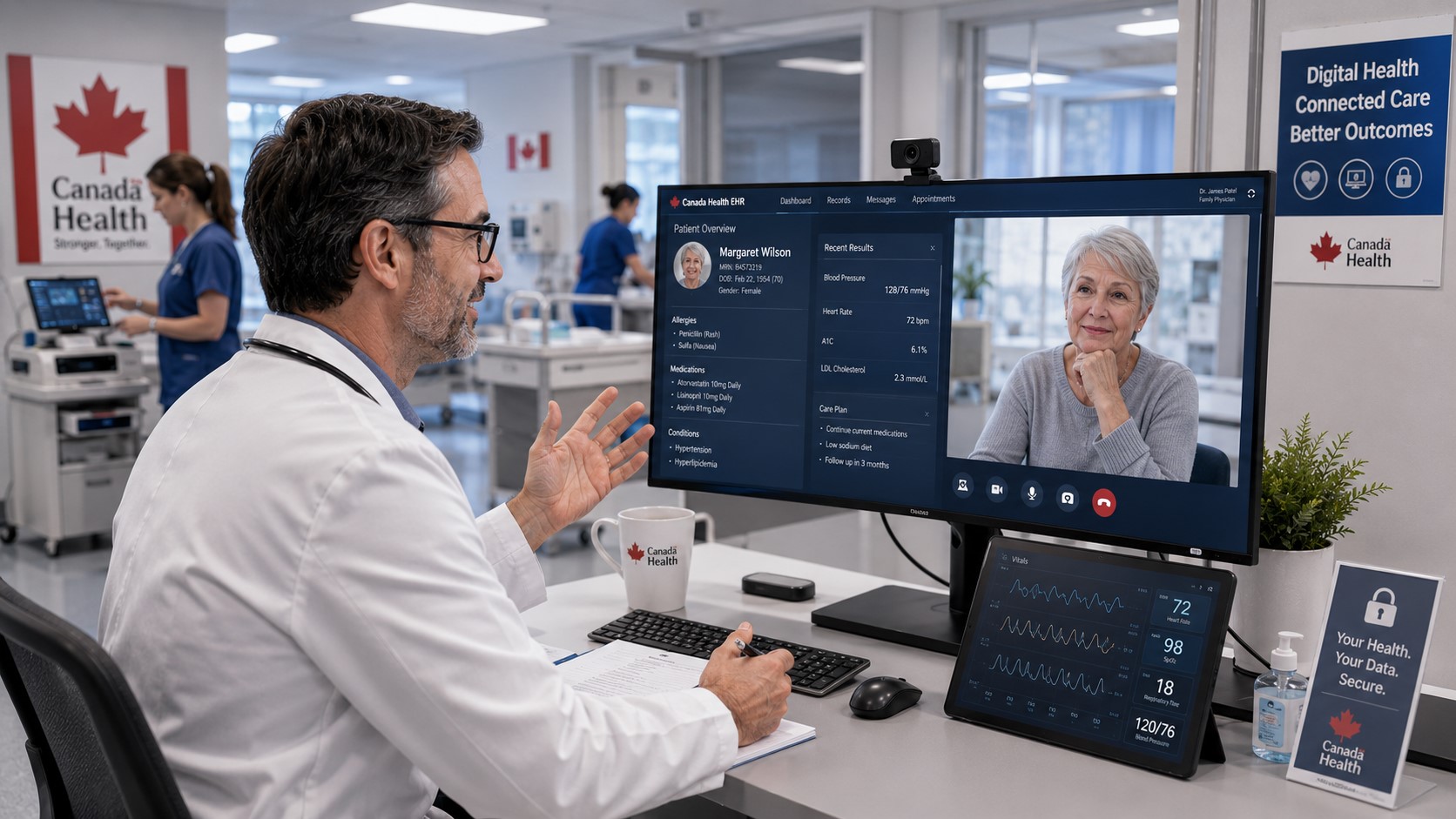
Canada is continuing to modernize its healthcare system through expanded virtual care services, giving patients greater access to family physicians, specialists, and mental health professionals without requiring in-person visits. Health officials say digital healthcare is becoming an increasingly important part of delivering timely medical services, particularly for people living in rural, remote, and underserved communities.
Provincial healthcare systems are investing in secure telemedicine platforms, electronic health records, and remote patient monitoring technologies. These tools allow healthcare providers to conduct virtual consultations, review diagnostic information, monitor chronic conditions, and coordinate follow-up care more efficiently, helping reduce unnecessary hospital visits.
Healthcare experts say the continued adoption of digital health technologies could improve patient convenience while easing pressure on hospitals and emergency departments. Investments in cybersecurity, privacy protection, and integrated health information systems are also supporting safer and more connected healthcare delivery across Canada.
Analysts believe virtual care will remain a central pillar of Canada's healthcare strategy as governments continue investing in digital infrastructure, innovation, and patient-centred services. The expansion is expected to improve healthcare accessibility while supporting a more resilient and efficient national health system.



Comments (0)
Sign in to join the conversation.